Fix Loose Fasteners, Rattles, and Corrosion in Aluminum Dock Decking Panels
Stop Dock Decking Problems Before They Ruin Lake Time
Loose aluminum dock decking panels, rattles underfoot, and ugly white spots of corrosion can take the fun out of a day on the water fast. When you are trying to enjoy that last stretch of warm weather, the last thing you want to feel is a panel shift or hear metal clanking with every wave.
Many lakefront owners jump right to thinking about full dock replacement. In most cases, that is not needed. Targeted repairs to your aluminum dock decking panels can solve the problem, extend the life of your system, and keep you safely on the lake without a big project.
In this guide, we walk through how to spot issues early, what those symptoms usually mean, and how a pro can address loose fasteners, rattles, and corrosion without replacing everything. As a Minnesota-based dock manufacturer, we design aluminum docks and accessories to be easy to maintain, adjust, and repair with simple tools and clear steps.
Diagnose What Your Aluminum Dock Decking Panels Are Telling You
Before anyone starts working on a dock, safety comes first. Make sure the water is calm, keep kids and pets off the dock, and wear shoes with good grip. If you are not comfortable being on the dock because it feels unstable, it is time to call a professional right away.
Start with a slow walk down the dock and pay attention to what you feel and hear. We like to do a light bounce test, just a gentle shift of weight, not jumping. Listen for any rattles, clicks, or squeaks. Watch how each panel moves as you step on it.
Look closely at:
- Panel seams, where two panels meet
- Corners and edges, especially at the shoreline and outer end
- Areas near boat lifts, ladders, and tie-up points
- High-traffic zones where everyone loads and unloads
Common symptoms and what they often mean:
- Rattle or clanking sound: loose fasteners, clips, or hardware
- Panel movement underfoot: shifting panels or play between frame and decking
- Surface discoloration or light pitting: early corrosion or normal oxidation
- Bending or sagging between supports: possible structural concern
Minor rattle, light surface corrosion, and small shifts can usually be handled with targeted repair. If you see major warping, deep pitting, cracked metal, or a panel that feels like it might give way, it is time for a dock professional to inspect and recommend repair or selective replacement.
Stop Loose Fasteners and Rattle Before Winter
Even well-built aluminum dock decking panels change over time. Waves, boat wakes, people rolling coolers, and seasonal temperature swings all work hardware back and forth. Aluminum expands and contracts as the weather changes, and that slow motion can loosen fasteners and clips.
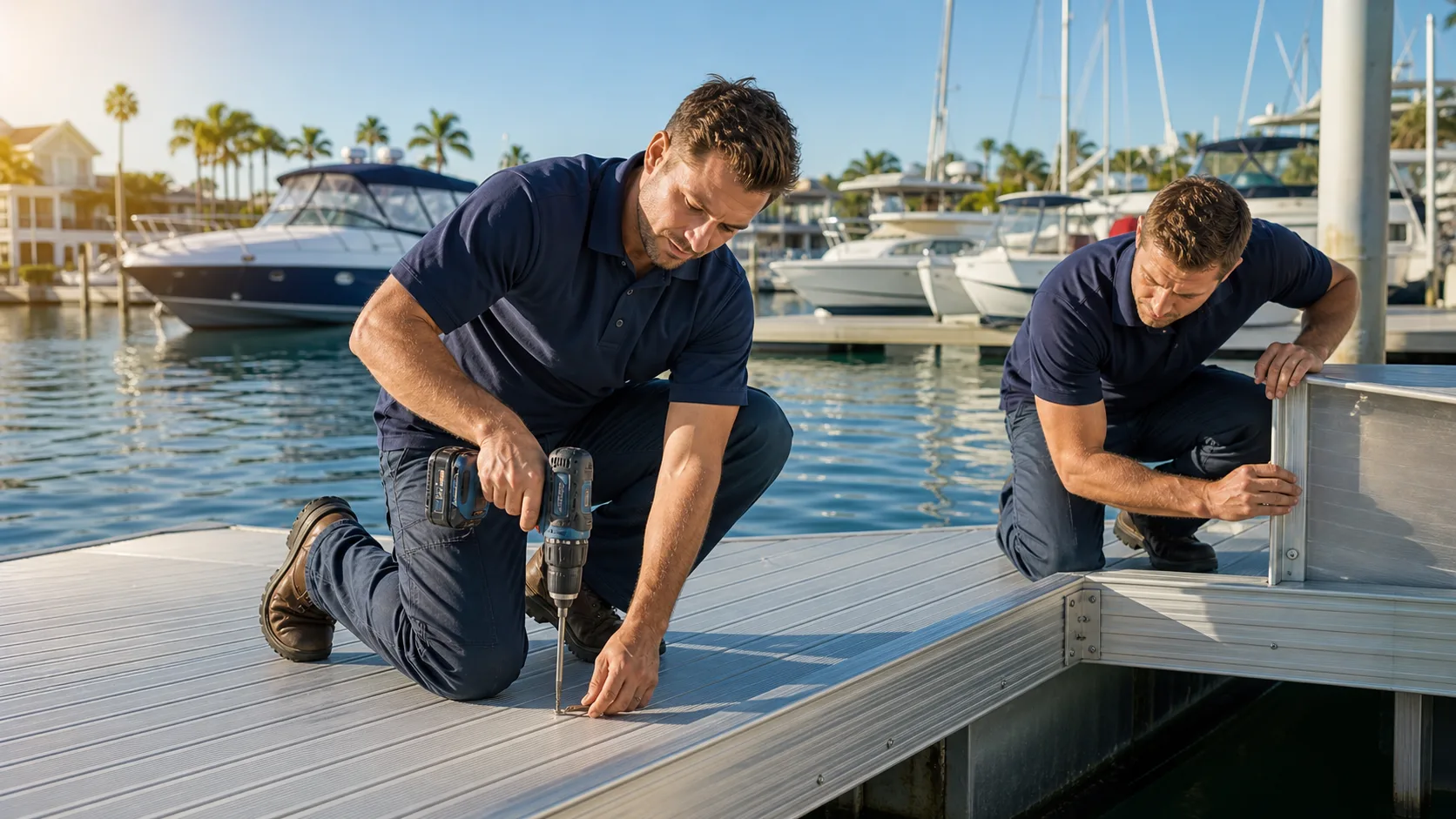
A regular tightening routine helps keep panels quiet and secure. A dock pro will usually bring:
- The correct size wrenches or socket set
- A screwdriver set matched to the hardware type
- Replacement stainless or aluminum-friendly hardware
- Anti-rattle shims or spacers if the design calls for them
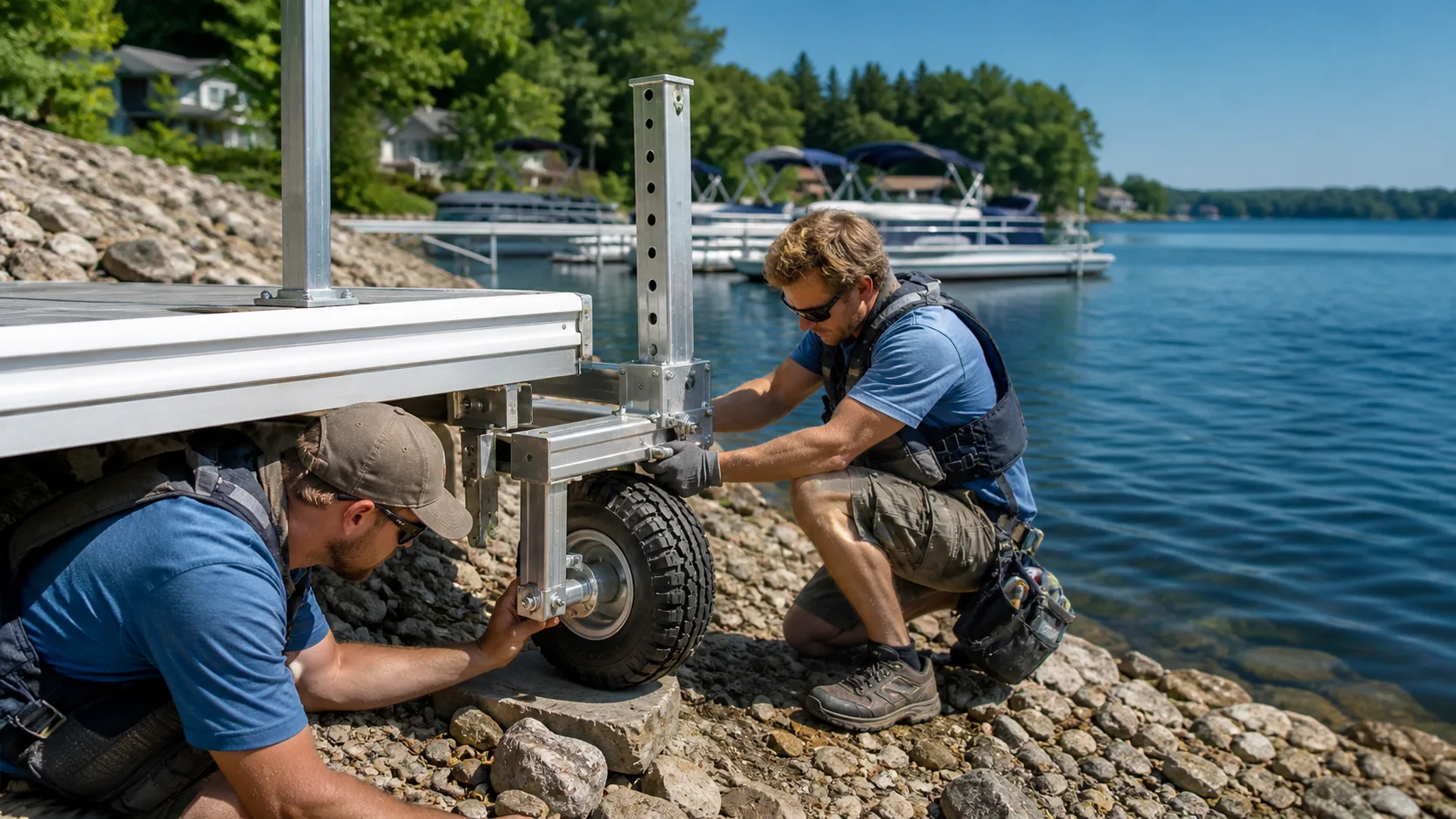
Safe access matters. Some fasteners are reached from the top, some from the side, and some from underneath. A professional will know when it is safe to work from a boat or when sections should be moved to shallower water or even to shore.
To avoid creating new stress points, tighten hardware in a pattern instead of at random. Working from the center outward, or from the shore end toward the lake end, helps panels sit flat and keeps pressure even. After adjustments, a second walk and bounce test confirms that the rattle is gone and the deck feels solid.
Sometimes the better long-term move is to upgrade hardware. That can include:
- Replacing worn or rusting fasteners with options that pair well with aluminum
- Swapping tired panel clips for new ones that hold more snugly
- Adding anti-rattle shims between panel and frame where there is minor play
- Checking the support frame and crossmembers for any flex or looseness
These upgrades are usually small steps that can add years of quiet use to your aluminum dock decking panels.
Fight Corrosion and Stains Without Hurting Your Dock
Aluminum does not rust like steel, but it does react to the environment. What many people call corrosion is often a thin white or chalky film. This oxidation layer can actually help protect the metal underneath, as long as it is not paired with deep pitting or flaking.
Here is what to look for:
- White or light gray film: normal oxidation, often mostly cosmetic
- Small pits or rough spots: early-stage corrosion that should be watched
- Dark staining around mixed hardware: possible dissimilar metal reaction
- Flaking, sharp edges, or soft spots: potential structural issues
Cleaning panels the right way helps reduce staining and protects traction. A careful cleaning routine might include:
- Using an aluminum-safe cleaner instead of harsh acids
- Scrubbing with a soft brush or non-scratch pad
- Rinsing with lake water or clean fresh water afterward
- Avoiding high-pressure tips aimed close to the surface
Too much pressure, especially too close, can damage coatings or textured surfaces that help with grip. A professional cleaner who understands aluminum docks can get rid of algae and lake scum without harming the decking.
Basic corrosion control often comes down to smart hardware choices and small fixes:
- Isolate dissimilar metals where possible
- Replace badly corroded bolts, nuts, and washers
- Touch up protective coatings when the manufacturer allows it
- Swap out a single damaged panel instead of an entire run of dock
If a panel shows deep pitting over a wide area, or if it has sharp, crumbling edges, that is usually a sign that replacement of that panel is a safer route.
Reduce Future Panel Problems with Smart Seasonal Habits
A little attention at the end of the boating season goes a long way. We like to think of an end-of-season checklist as a way to buy peace of mind for next spring.
An effective end-of-season pass might include:
- Tightening all accessible fasteners and panel clips
- Cleaning panels to remove algae, leaves, and dirt
- Checking for sharp edges that could catch bare feet or gear
- Confirming that panel seams are straight and aligned
- Taking photos of any trouble spots for future reference
Preventative upgrades are often simple. In busy spots, such as near boat lifts or swim ladders, adding extra support or bracing under the decking can reduce bounce and long-term stress. Using accessories that are made to work with aluminum dock decking panels helps avoid weird loads or twisting forces that can loosen hardware.
Standardizing hardware sizes is another small win. When most of your fasteners match, it is easier for a dock professional to work efficiently and keep the system in good shape.
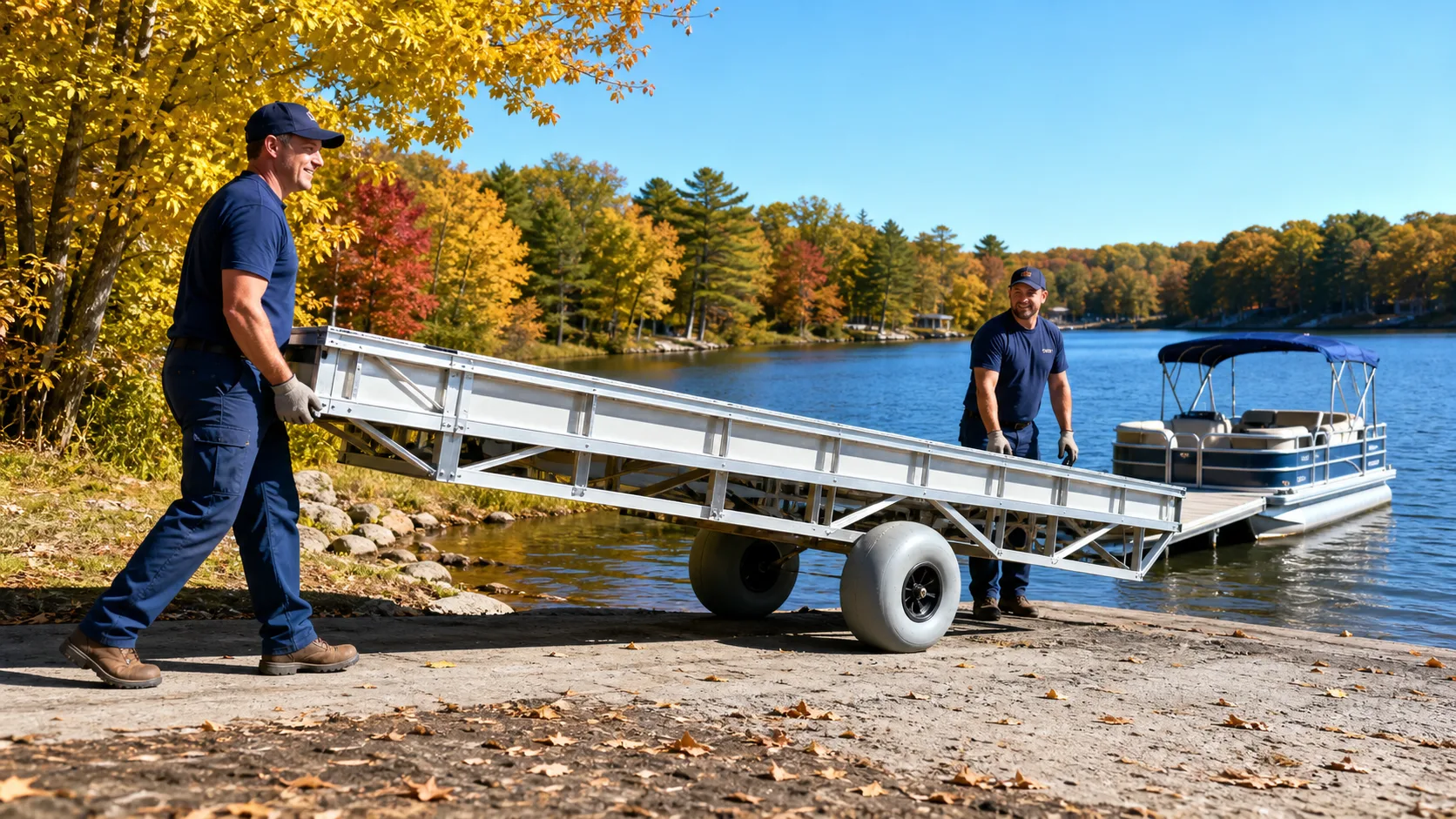
For some docks, especially in areas with heavy ice, removing decking panels for the off-season makes sense. When panels are removed:
- Stack them on a flat surface with padding between layers
- Store them away from corrosive chemicals or salt
- Label sections so spring reassembly is fast and simple
Fall is also a smart time to plan for any replacement parts you might need, since there is more time to measure, compare options, and think through upgrades before the rush of spring.
Keep Your Aluminum Dock Ready for Next Season’s First Splash
Staying ahead of loose fasteners, rattling aluminum dock decking panels, and early corrosion is one of the best ways to protect your dock investment. Most issues start small. When caught early, they can often be handled with targeted repair, selective panel replacement, and a few thoughtful hardware upgrades instead of a full rebuild.
At Vibo Marine in North Branch, Minnesota, we design aluminum docks, boat lifts, and accessories to be easy to maintain over many seasons. With a short maintenance weekend and a careful inspection routine, your dock can stay solid, quiet, and ready for that first boat ride as soon as the ice clears and the lake calls again.
Get Started With Your Project Today
Upgrade your shoreline with durable, low-maintenance aluminum dock decking panels designed to handle changing water levels and frequent use. At Vibo Marine, we work with you to match the right dock system to your property, boating style, and long-term plans. If you are ready to discuss options or request a quote, simply contact us and our team will help you move forward with confidence.