Early-Fall Dock Pull-Out Strategy for Roll in Boat Docks
Stay Ahead of the Freeze with a Smart Dock Plan
An early-fall pull-out plan for roll-in boat docks keeps your dock safe and your stress level low. On many Minnesota and upper Midwest lakes, we move pretty fast from cool nights to hard freeze. That narrow window is when smart dock owners get their systems out of the water and up on shore.
A clear plan protects your dock and lift, saves time, and keeps you from fighting cold wind and icy water at the last minute. It also helps you spot small issues before they turn into big spring surprises. As a family-owned dock-and-lift manufacturer based in North Branch, Minnesota, we build roll-in systems to make both installation and removal easier and safer, but a little planning still goes a long way.
In this guide, we walk through how to time your pull-out, what to inspect before rolling your dock out, how to keep the process smooth and safe, and how to store everything so spring setup feels simple instead of stressful.
Reading the Lake and Weather for Perfect Timing
Good timing is everything with roll-in boat docks. In early fall, air temps drop, water cools, and levels can jump up and down with rain and wind. A sudden cold snap can freeze water around wheels and legs, which is hard on your equipment and miserable to deal with.
Helpful timing cues include:
- Nighttime lows sitting in the 30s and low 40s
- The first hard frost in your area
- Waterline pulling back from your usual summer mark
- Less weekend boat traffic and fewer guests at the cabin
Use those signals to mark a “pull-out window” on your calendar. Treat it like any other fall maintenance task, not a maybe-if-we-feel-like-it chore. Line it up with:
- A day when you have enough helpers available
- Good daylight and a calm wind forecast
- Extra time afterward for cleanup and storage, not just the roll-out itself
If you wait for the last warm, sunny Saturday, you often end up working in cold water with no help and rushing through important steps.
Pre-Pull-Out Inspection to Protect Your Investment
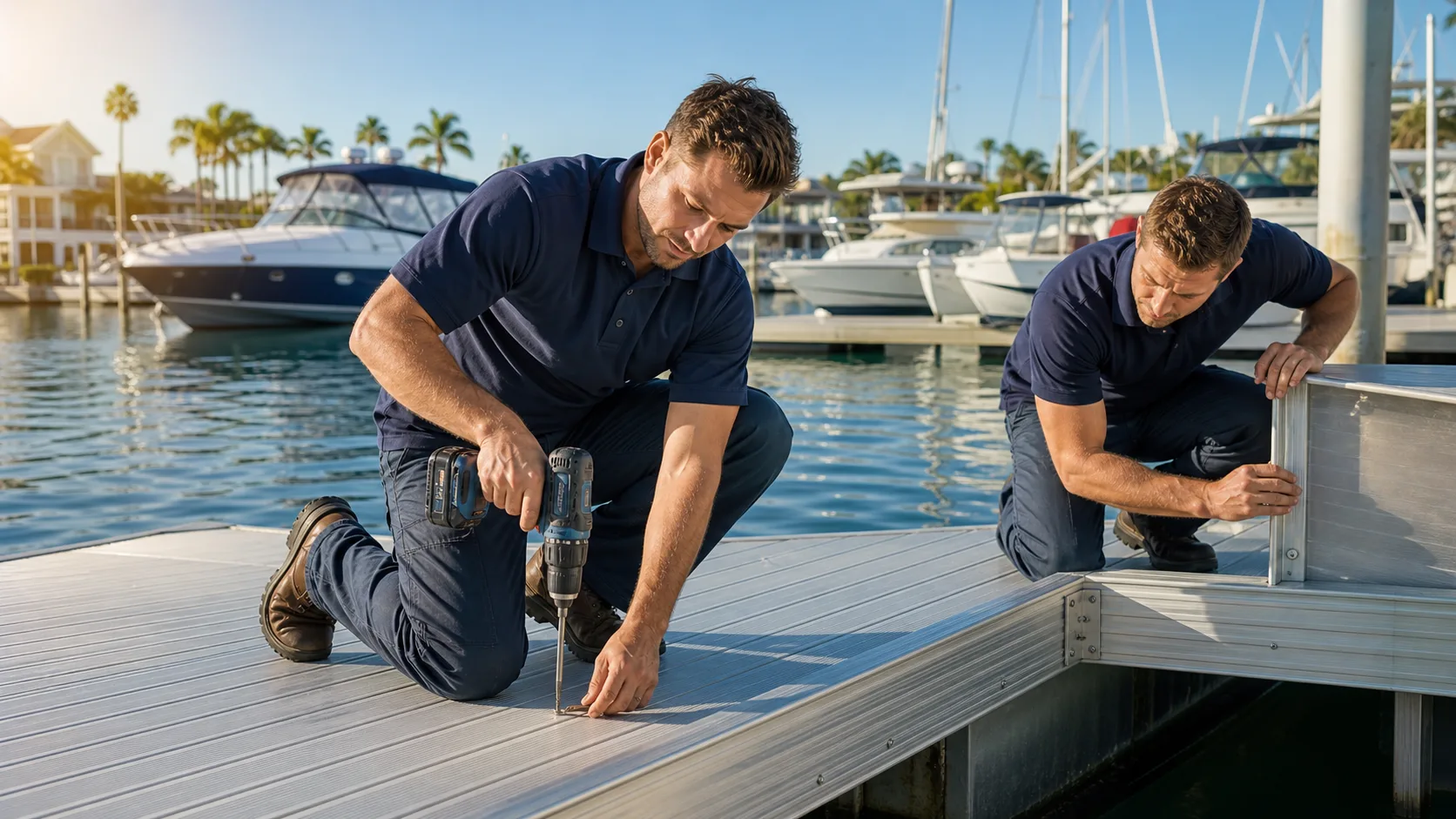
Before you start rolling anything, give your dock a quick but careful inspection. This helps protect your investment and makes removal safer.
Walk the full length of the dock and look for:
- Loose or missing hardware like bolts, nuts, or pins
- Legs that look bent, crooked, or out of line
- Soft or uneven lake bottom under the wheels
- Decking that is cracked, loose, or warped
It helps to use your phone to take a few pictures and jot a simple list. When everything is on shore and your mind is on other things, it is easy to forget what you saw out on the water. Photos and notes make it easier to plan winter repairs or order replacement parts.
Before you roll the dock out, we suggest:
- Tightening accessible bolts and checking wheel pins
- Making sure leg adjustments are working and not seized
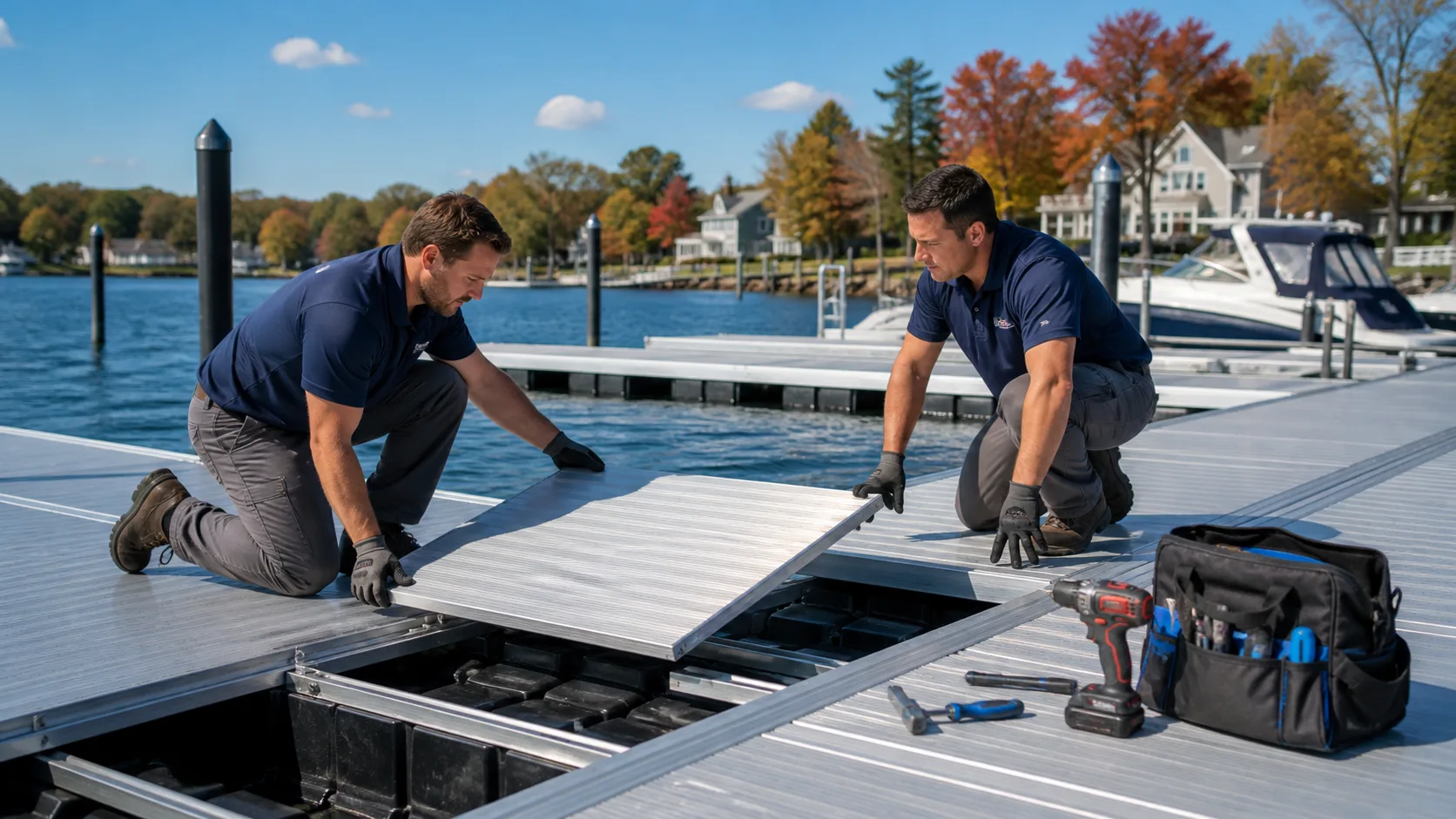
- Pulling off removable accessories like benches, ladders, bumpers, stairs, and steps
Removing accessories does two things. It cuts weight and makes the dock easier to move. It also reduces the chance that something gets bent or snapped when people are pushing, pulling, or turning sections toward shore.
Safe, Smooth Removal for Roll-in Boat Docks
Once your inspection is done, you are ready to move the dock. A clear sequence keeps everyone on the same page.
A simple pull-out process looks like this:
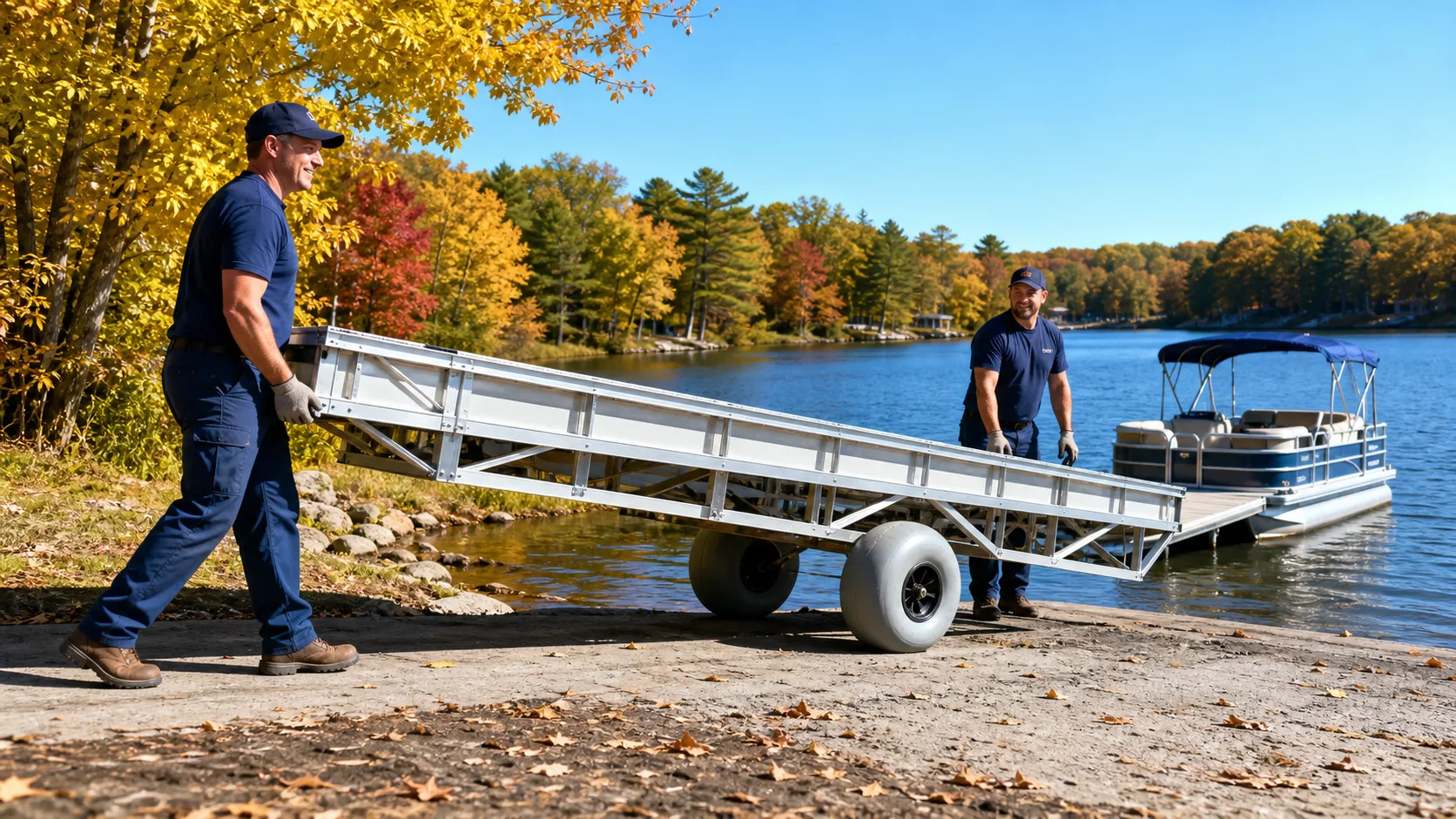
- Clear the path to shore. Pick up rocks, sticks, and anything that can snag wheels or feet.
- Take off loose accessories and set them safely above the waterline.
- Decide if you need to detach any sections in deeper water to make shorter, lighter runs.
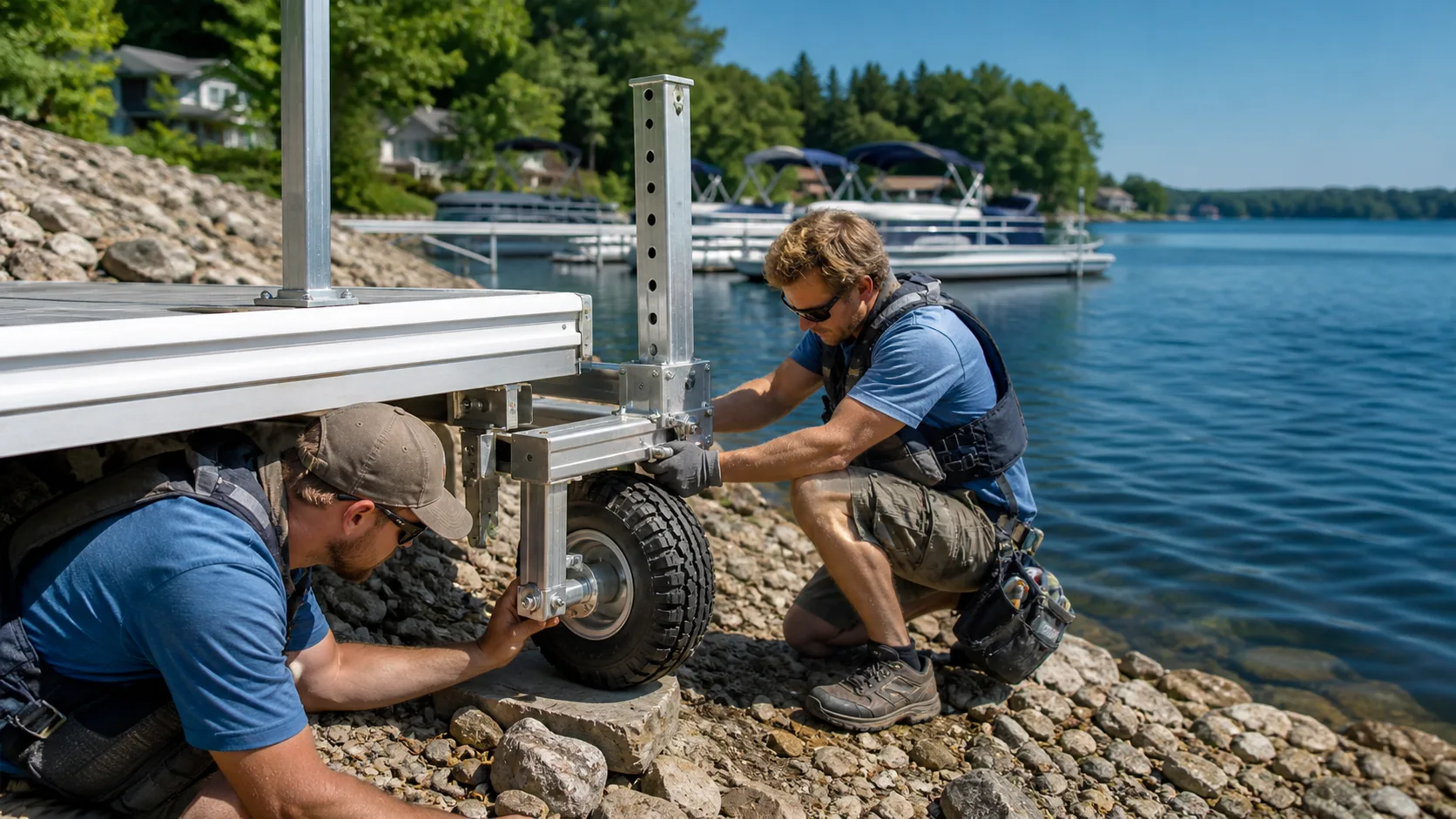
- Adjust leg heights so wheels roll cleanly without digging into the lake bottom.
- Assign roles so each person knows where to stand and when to push or pull.
Safety comes first, especially on cold, slippery shorelines. We recommend:
- Sturdy footwear with good traction and warm socks
- Work gloves for grip and to protect fingers on cold aluminum
- Careful footing on slick rocks, mud, or algae
- Holding onto the dock frame, not railings or accessories, when moving sections
- Never trying to move a long or heavy run of dock with only one or two people
Over time, you can make roll-out easier year after year. Some helpful habits:
- Match wheel size and style to your lake bottom so they roll instead of plow
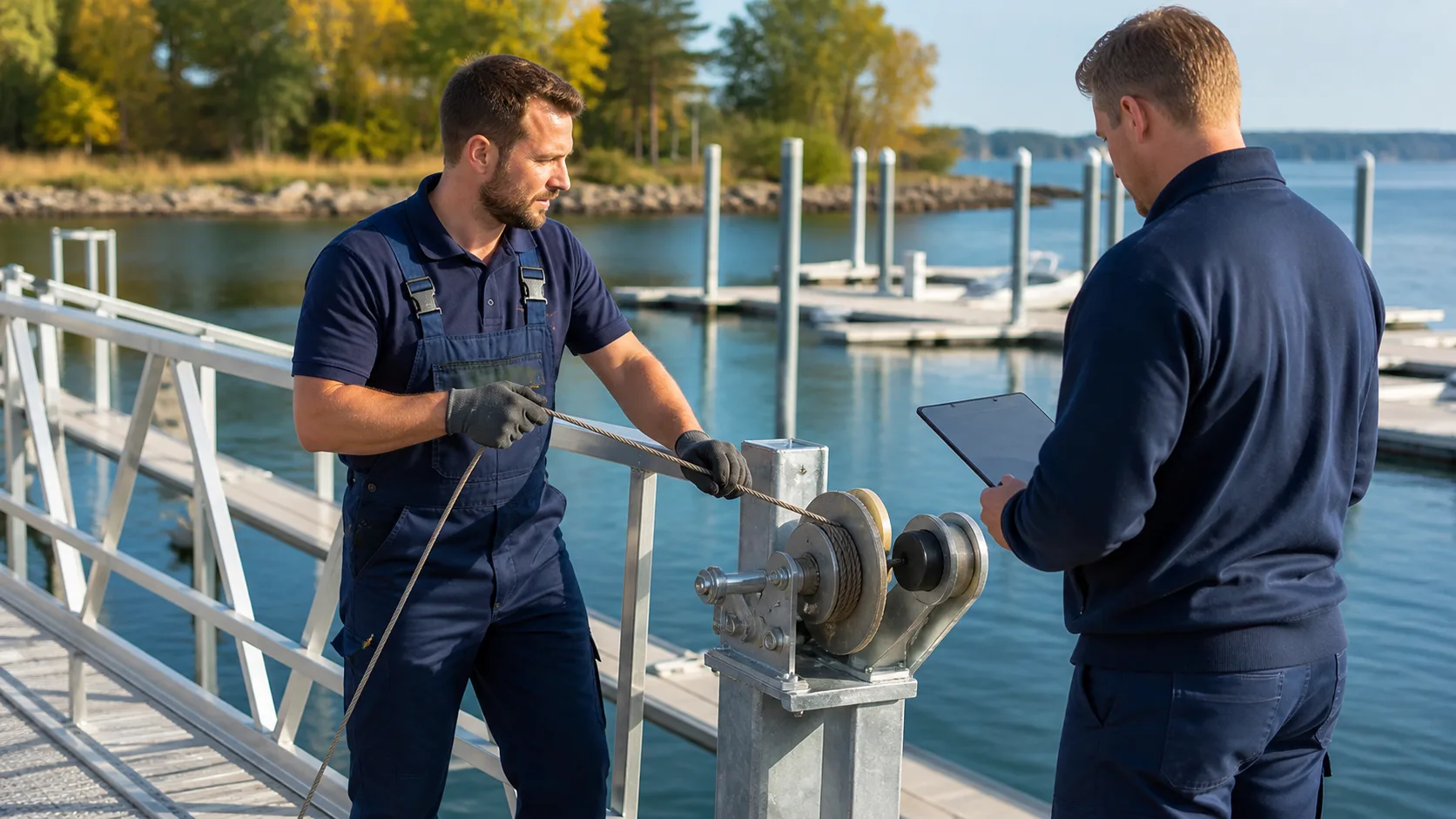
- Use a winch, tractor, or ATV for long, shallow approaches, instead of straining backs
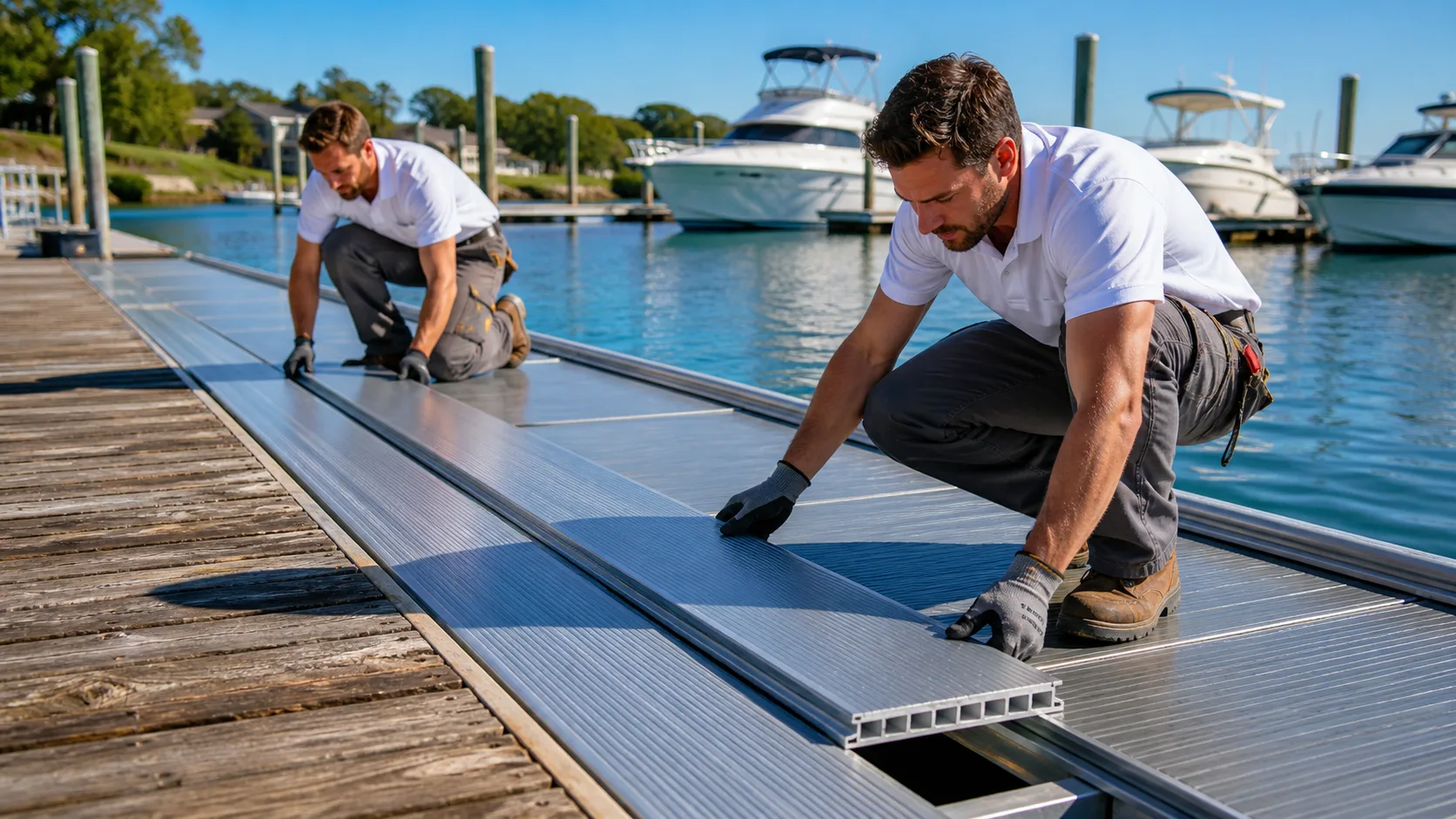
- Consider lighter aluminum sections if you are still wrestling older, heavier pieces
Small changes like these save time and energy every single season.
Storing and Winterizing Your Dock for Spring Success
Once your roll-in boat dock is on shore, good storage is just as important as good removal. You want your dock above the snow and out of the way of anything that can shift or crush it.
Pick a storage spot that is:
- Stable and level, so sections do not twist over winter
- Above typical snow banks and drifting areas
- Away from plow piles, roof snow slides, and spring runoff paths
Support frames on solid blocking instead of placing them directly on bare ground. This keeps aluminum out of mud and standing water and makes it easier to work around sections if you tackle any winter or spring projects. When stacking sections, keep them flat and straight. Pad contact points using wood, old carpet, or rubber to protect finishes and decking.
Before you walk away for the season:
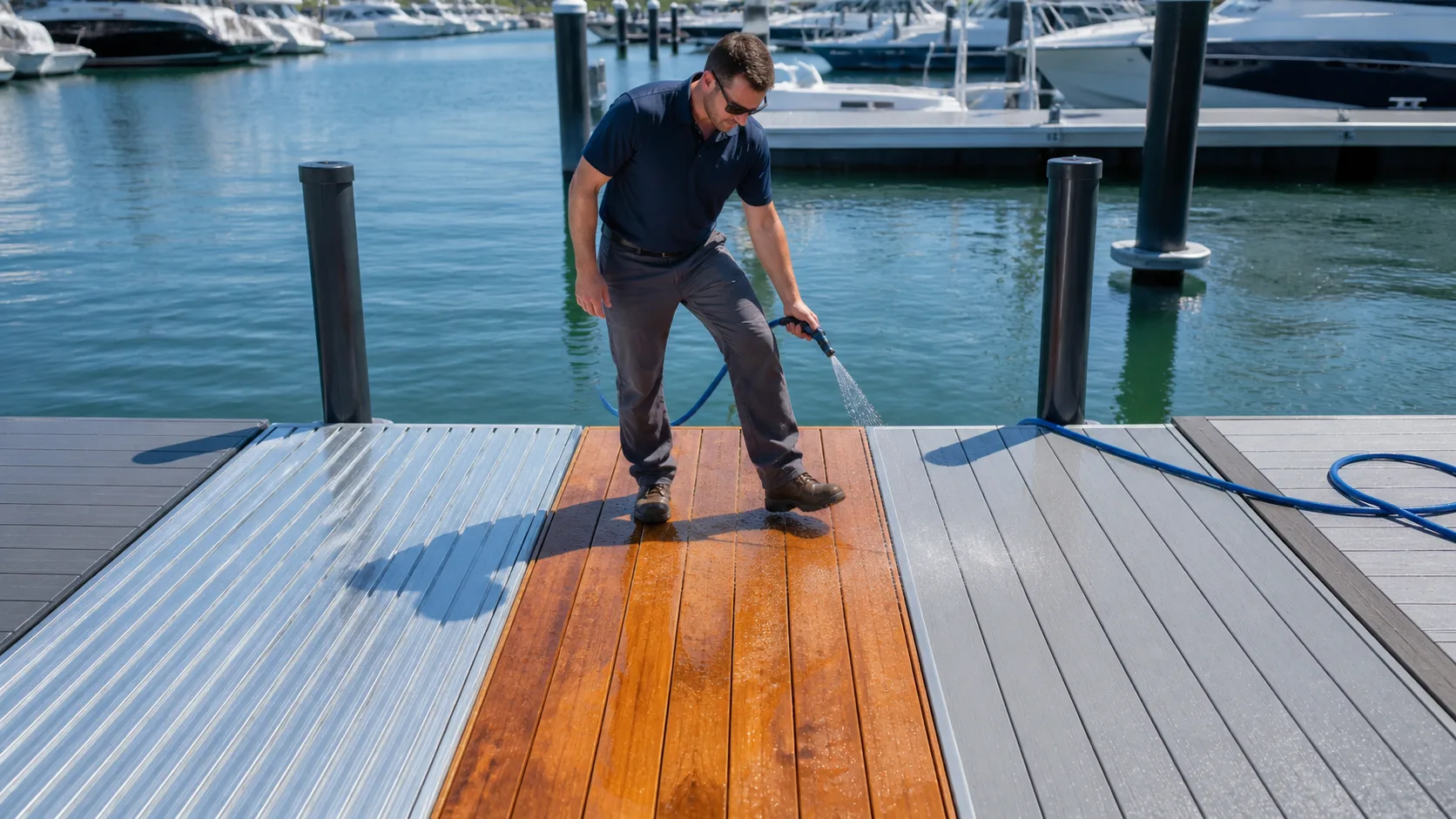
- Rinse off algae, plant growth, and zebra mussels
- Let everything dry before stacking to cut down on mildew
- Inspect and label sections so spring layout is easier to remember
- Note any replacement parts, accessories, or upgrades you would like to add
Light touch-up, following your manufacturer’s care tips, can keep your dock looking good for many seasons. A simple written list of parts or ideas for changes makes off-season planning a lot smoother.
Make Next Spring Easier by Planning Today
A thoughtful early-fall pull-out for your roll-in boat docks sets you up for an easy spring. While the steps are fresh in your mind, write down what went smoothly and what felt harder than it should.
You might note:
- Shore spots where wheels sank or caught on rocks
- Leg heights that worked well for your summer water levels
- Sections that felt too heavy or awkward for the helpers you usually have
- Accessories that would make getting on and off the dock easier next year
Those notes turn into a simple plan for better spring setup. Adjust leg settings, shift wheel positions, or tweak your section layout based on what you learned. If you want layout advice, replacement parts, or accessory ideas that could reduce your workload, the quieter winter months are a good time to explore options with a manufacturer like Vibo Marine, so your roll-in system is ready to roll right back into the water when the ice is gone.
Get Started With Your Project Today
If you are ready to upgrade your shoreline with durable, easy-to-use roll-in boat docks, we are here to help you plan the right setup for your property. At Vibo Marine, we work with you to understand your water conditions, layout, and goals so your dock fits how you actually use your lakefront. Reach out to our team with your questions or ideas, and we will walk you through options, pricing, and timing. To start the conversation, simply contact us today.