Weather Surprises Your Pontoon Boat Lift Must Be Ready for Late Season
Stay Ready When the Weather Turns on Your Pontoon Lift
Late in the season, the lake can switch moods in a hurry. One minute the water is glassy and calm, the next minute the wind kicks up, waves build, and whitecaps start rolling in. Many pontoon owners have watched the sky change while they rush to get the boat up on the lift a little higher and a little safer.
That late-summer stretch is “surprise season” on many northern lakes. Storms move in fast, temperatures jump around, and weekend boat traffic gets heavy. All of that puts extra stress on your waterfront setup, especially on pontoon boat lifts that carry a lot of weight and surface area.
Your lift is often the first line of defense when the weather turns. But it only does its job if it is designed, installed, and cared for with those surprises in mind. From our point of view here in Minnesota, where we see all kinds of lake conditions, a strong, well-thought-out lift system is not a luxury. It is basic protection for your pontoon.
Late-Summer Storm Bursts and Sudden Wind Shifts
On hot, humid days, storms can pop up with almost no warning. Thunderheads stack up over the tree line, and soon you are dealing with sharp gusts, crosswinds, and quick bursts of heavy rain. A calm bay can turn into a washing machine in just a few minutes.
Wind and wave action push hard on pontoon boat lifts. The stress shows up in a few common ways:
- Side loading on the canopy and frame when the wind hits from the side
- Twisting forces on posts and crossmembers as waves lift and drop the boat
- Extra strain on cables, pulleys, and winches when the pontoon rocks in the cradle
If the frame is light or flexy, those forces can rack the lift out of square. When that happens, you might notice the boat coming up crooked, bunks no longer lining up, or the canopy shaking more than it should.
When you are choosing or upgrading a lift to handle wind:
- A rigid all-aluminum frame with strong welds
- A wide stance so the lift resists tipping and twisting
- Smart diagonal bracing that keeps everything tight
- A solid anchoring or footing system that holds steady on the lake bottom
Designs that are built and refined on real lakes have a big advantage. When a lift system lives through years of quick storms and shifting winds, small design details get tested for real. That is the kind of feedback we count on when we build pontoon boat lifts for our own Minnesota waters.
Rapid Water Level Changes and Shoreline Erosion
Late-season rains can raise lake levels in a hurry. On the other hand, a stretch of hot, dry weather can pull them down just as fast. Your lift might be sitting in perfect depth one week and feel too high or too low the next.
When water levels swing, problems show up such as:
- Toons or keel scraping the frame when you pull in
- Bunks no longer matching the shape of the pontoon
- Legs and feet sinking or tilting as the lake bottom shifts
If the lift sits too low, the boat may hit the crossmembers or drag when you try to lift it. If it is too high for new water levels, you might have to power in too hard, which is tough on the lift, dock, and boat.
That is where good adjustability matters. A practical pontoon lift should offer:
- Multiple leg settings for different depths
- Feet that are easy to adjust as the bottom moves
- Bunks or guides that can be tuned to your pontoon’s layout
Shoreline erosion and shifting sand or muck slowly loosen things up. What felt rock solid in spring can feel a little wobbly by late summer. A pre-fall check and some simple adjustments can bring everything back to level and help your lift handle the next round of wild weather.
Early Fall Cold Snaps Before You Are Ready
By late August around the Upper Midwest, we are already close to fall. You can have sunny afternoons and then cold, windy nights not long after. Frost can show up ahead of when many people plan to pull their boats.
Those cooler evenings and stronger breezes can make it tempting to say, “I will deal with the lift later,” especially when you are using the boat less often. The trouble is, the weather is getting tougher right when many owners feel like they are almost done for the season.
Well-designed pontoon boat lifts take some of the pain out of that shoulder season. Features that help include:
- Smooth, dependable winch and lifting action
- Corrosion-resistant components that do not mind damp, chilly air
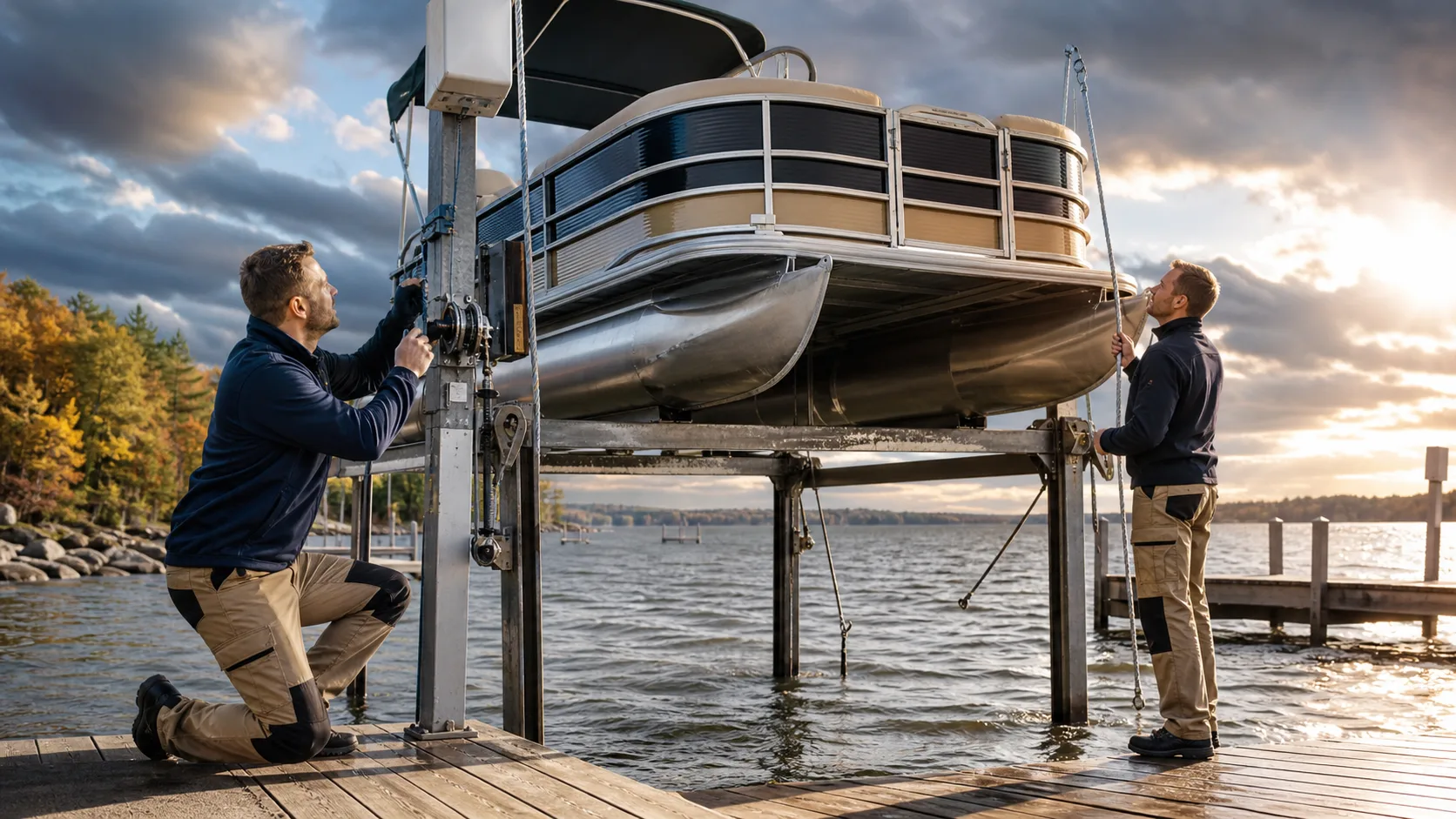
- Simple, open access to cables, pulleys, and fasteners for quick checks
A late-August maintenance checklist can be short and still very helpful. Walk your lift and:
- Inspect cables for fraying or flat spots
- Spin pulleys to make sure they turn smoothly
- Look over welds and bolts for any cracks or looseness
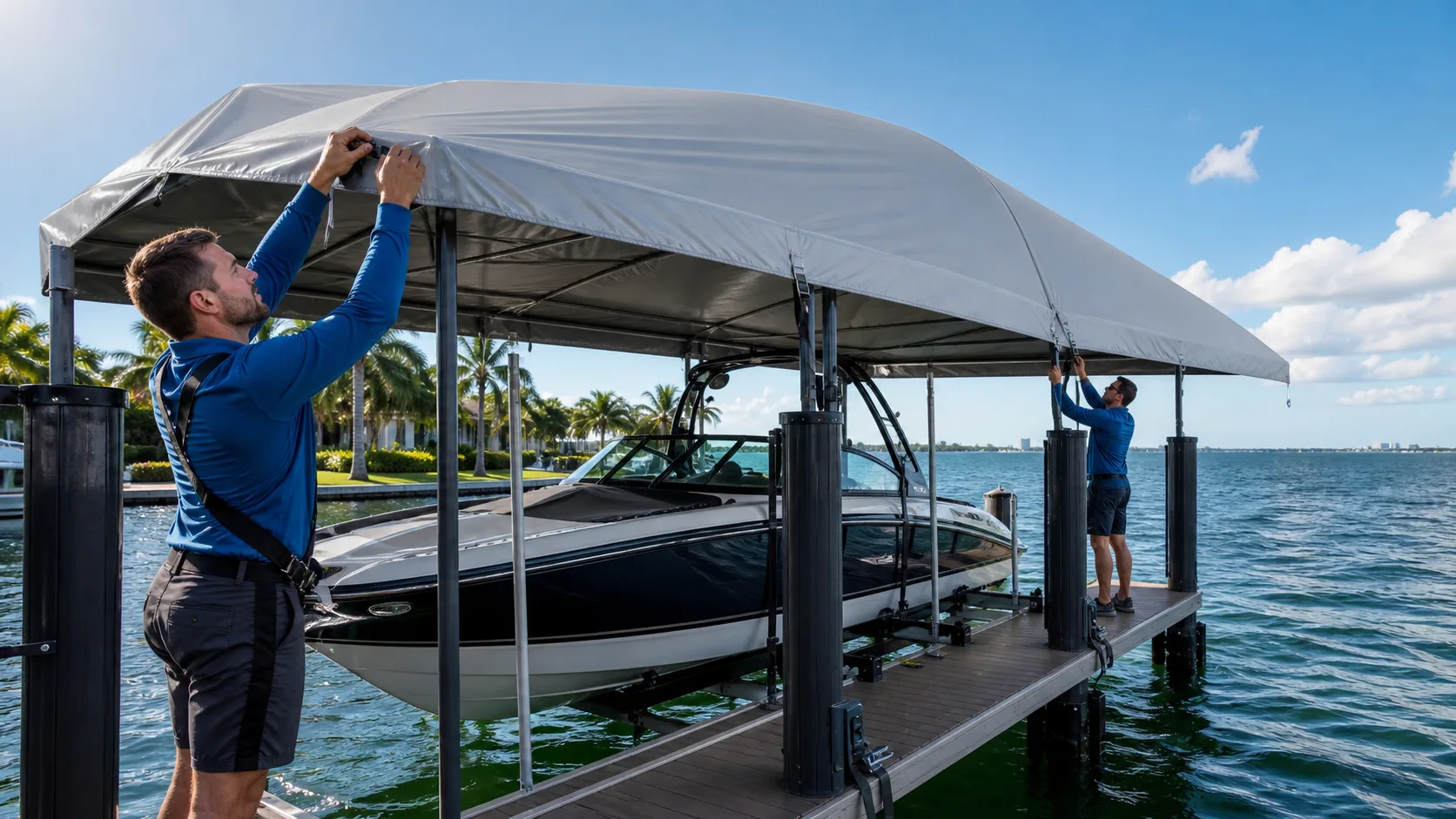
- Check that the canopy is secure and not flapping or tearing
- Run the lift up and down to confirm smooth, even travel
Catching small issues before cold weather sets in can save a lot of trouble when it is time to pull the boat or when that first big fall storm hits.
Everyday Surprises That Stress Your Lift Hardware
Not every “weather event” is a dramatic storm. The little things that happen over and over might matter just as much for the long life of your lift. Windy afternoons, busy holiday weekends with big wakes, and long days of sun all add up.
Heat, humidity, and UV light are tough on lift parts. Over time they can cause:
- Canopies to fade, weaken, and start to tear
- Cheaper hardware to show surface rust and staining
- Metal to fatigue if it is not up to marine use
On top of that, the constant bouncing and rocking from waves and boat wakes keeps the whole system moving. If any part of the structure is weak, that constant motion can find it and make it worse.
When a surprise storm arrives after months of this quiet wear, that is when things can fail. A pontoon lift built from marine-grade aluminum with quality stainless hardware is better set up to deal with daily life on the lake plus those bigger hits from the weather.
Factory-direct builders can also help match canopies, bunks, and accessories to the way you actually use your pontoon. That kind of fit makes a big difference in how the lift holds up year after year.
Get Your Pontoon Boat Lift Ready Before the Next Storm
Sudden storm bursts, quick water level changes, early cold snaps, and everyday sun and wake action all combine to test pontoon boat lifts, especially as summer winds down. The tricky part is that many of these hits come late, right when owners are starting to think about closing up for the season instead of upgrading or fixing gear.
A good next step is simple: walk your shoreline. Watch how your pontoon sits on the lift. Give the frame a firm shake. Look for worn cables, bent or twisted components, uneven feet, and loose hardware. If anything feels off, it is better to make changes before the next wind shift, not after.
At Vibo Marine in North Branch, Minnesota, we design and build aluminum docks, boat lifts, and accessories for the real conditions lakefront owners live with, from quiet evenings to fast-moving storms. Getting your pontoon boat lift ready now helps protect your boat through the rest of this season and sets you up for a smoother start when the water opens again.
Protect Your Pontoon With A Lift Built To Last
Ready to make docking easier and protect your boat from waves and water fluctuations? Explore our durable, low-maintenance pontoon boat lifts designed to fit your shoreline and boating style. At Vibo Marine, we walk you through sizing, configuration, and setup so your lift works right from day one. Have questions or need a quote fast? Just contact us and we will help you plan the right solution.