Late-Summer Dock Pull-Out Checklist: Inspect Ramps and Winches Before Ice
Make Late-Summer Dock Pull-Out Faster and Safer
Pulling your dock and lift before ice season does not have to be a mad scramble in freezing wind. With a simple checklist and a little time in late summer or early fall, you can spot problems early, protect your gear, and make the actual pull-out day go more smoothly and be safer.
In this guide, we will walk through how to inspect ramps, winches, fasteners, and dock wheel kits before the real heavy work starts. Taking these steps now helps prevent mid-winter damage, avoids surprise failures when you are racing cold weather, and sets you up for a quick, low-stress launch in spring.
Inspect Dock Ramps for Sag, Flex, and Corrosion
Your dock ramp takes a lot of abuse. It is the bridge between solid ground and the water, so it sees foot traffic, waves, and shifting shoreline all season long. Before pull-out, give it a close look.
Start with a visual inspection of the ramp frame and decking:
- Look along the side for sagging or a visible bend
- Step on each area to feel for soft, spongy, or loose boards
- Look for cracked welds on aluminum frames
- Check for surface corrosion, especially near the shoreline connection
Next, move to the hardware and hinge points. These parts carry big loads while you are pulling the dock.
Pay close attention to:
- Ramp hinges and pins, checking for elongation or wear in pin holes
- Mounting plates and shoreline brackets, looking for rust or warped metal
- Any misalignment that could cause binding when you start lifting or rolling
If the ramp catches, twists, or pops as you lift it, that can suddenly shift weight and create a safety issue. It can also add stress to the dock frame.
While you are there, check safety and traction. Look at:
- Surface grip, checking for algae, moss, or worn treads
- Handrail stability, testing for wobble or loose hardware
Make notes on anything you want to fix or upgrade over winter, when your ramp is dry and easy to work on.
Test Winches and Cables Before Heavy Lifting
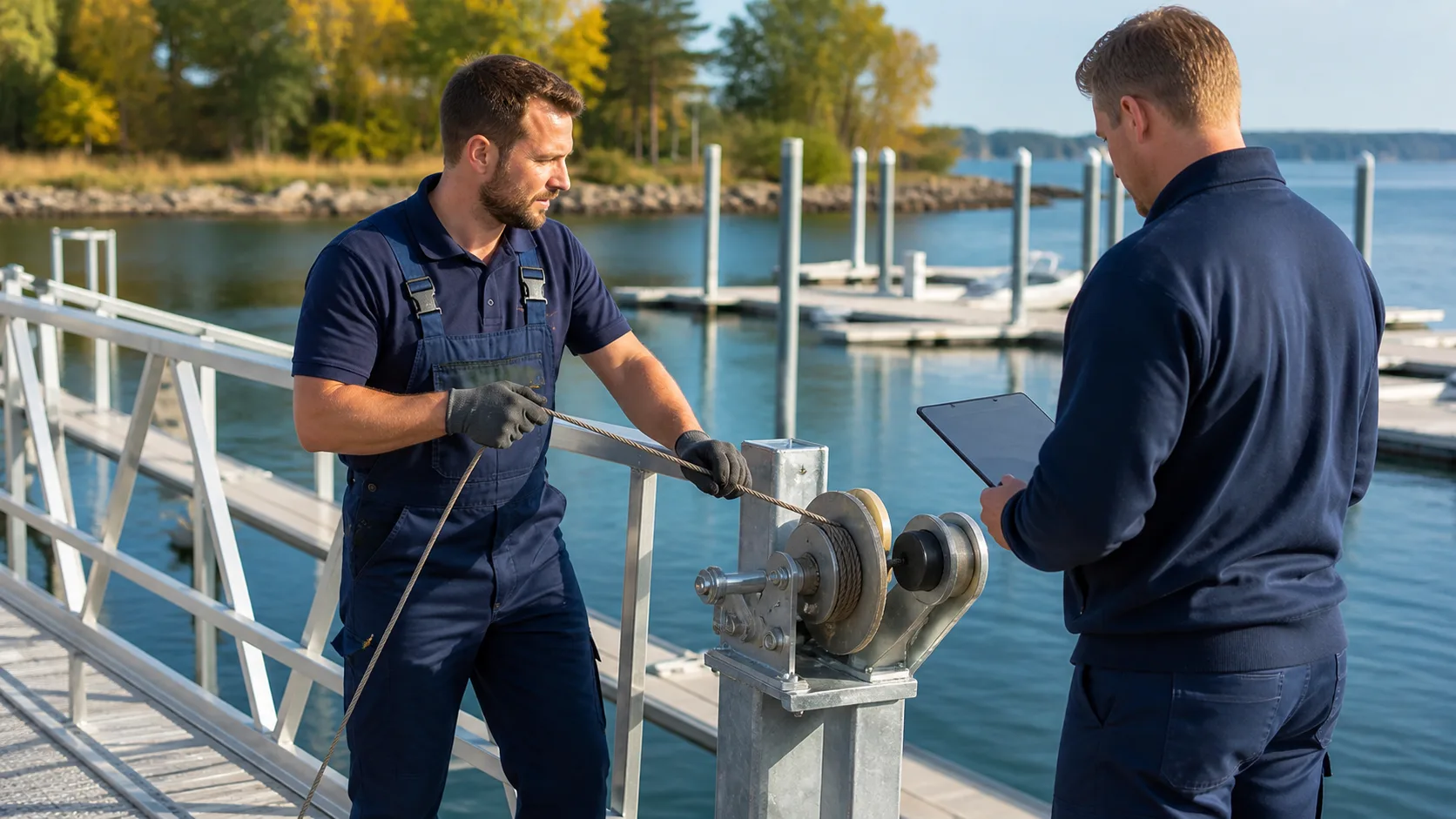
Winches work hard and often get ignored until something slips. Before you ask them to pull a dock section or lift out of the lake, test each one under a light load.
Crank each winch slowly and listen:
- Grinding or crunching sounds can mean worn gears
- Skipping teeth or sudden jumps can signal a damaged pawl or gear
- Binding or heavy resistance might point to lack of lubrication or internal rust
If something feels off, stop and mark that winch for closer attention before you do the big pull.
Then move on to cables, straps, and attachment points.
- Fraying strands, especially near hooks, crimped ends, or tight bends
- Kinks, flattened spots, or birdcaging in cables
- UV damage or cracking on synthetic straps
- Rusty hooks, bolts, or mounting plates that could fail under load
Even a small weak spot can give way right when you are lifting the heaviest piece. Cleaning and lubricating winch mechanisms now helps them work more smoothly and last longer. Assign a tag or piece of tape to any winch that should be rebuilt or replaced before spring so you do not forget about it once the dock is in storage.
Tighten and Replace Critical Dock Fasteners
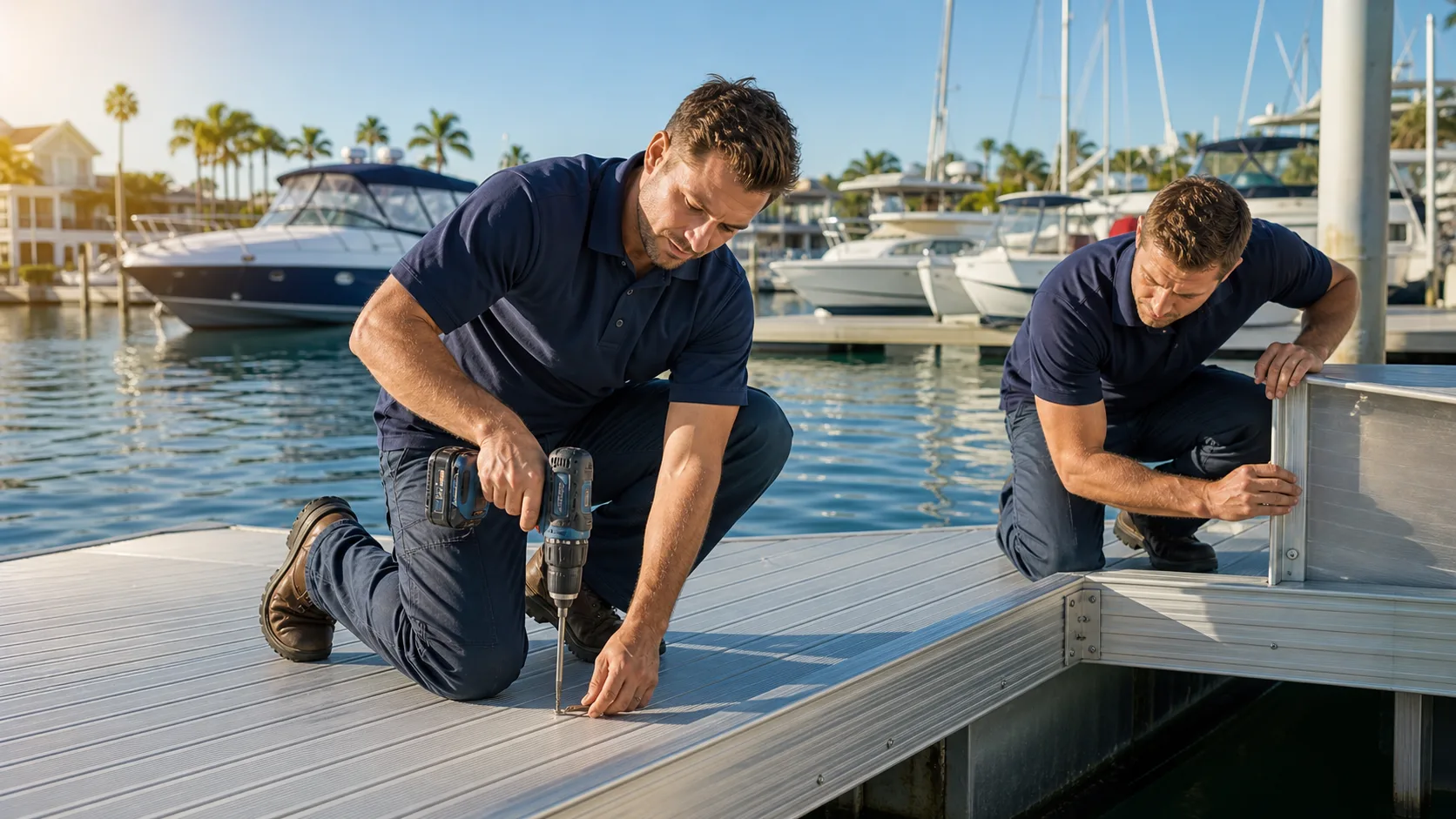
A dock is only as solid as the fasteners that hold it together. Before you start moving sections around, take a slow walk from shore out to the deep end and test hardware as you go.
Do a systematic check:
- Wiggle every leg, bracket, and cross-brace to feel for movement
- Look for nuts that have backed off or washers that have slipped
- Note any rattling connections when you rock a section gently
Corrosion and metal fatigue usually show up in the same spots year after year, often in splash zones or where dissimilar metals meet. Watch for:
- Rusted, stretched, or rounded bolts and nuts
- Discolored areas where metals touch each other
- Holes that look elongated around bolts or pins
Mark anything questionable so you can swap it with marine-grade hardware later.
As you tighten, keep an eye on alignment and rigidity. Sections should sit square and level when the water is calm. Tight cross-bracing and leg fasteners help the dock act as one solid structure during pull-out. That reduces twisting, which can stress frames and make rolling or lifting the dock much harder.
Optimize Dock Wheel Kits for Easy Pull-Out
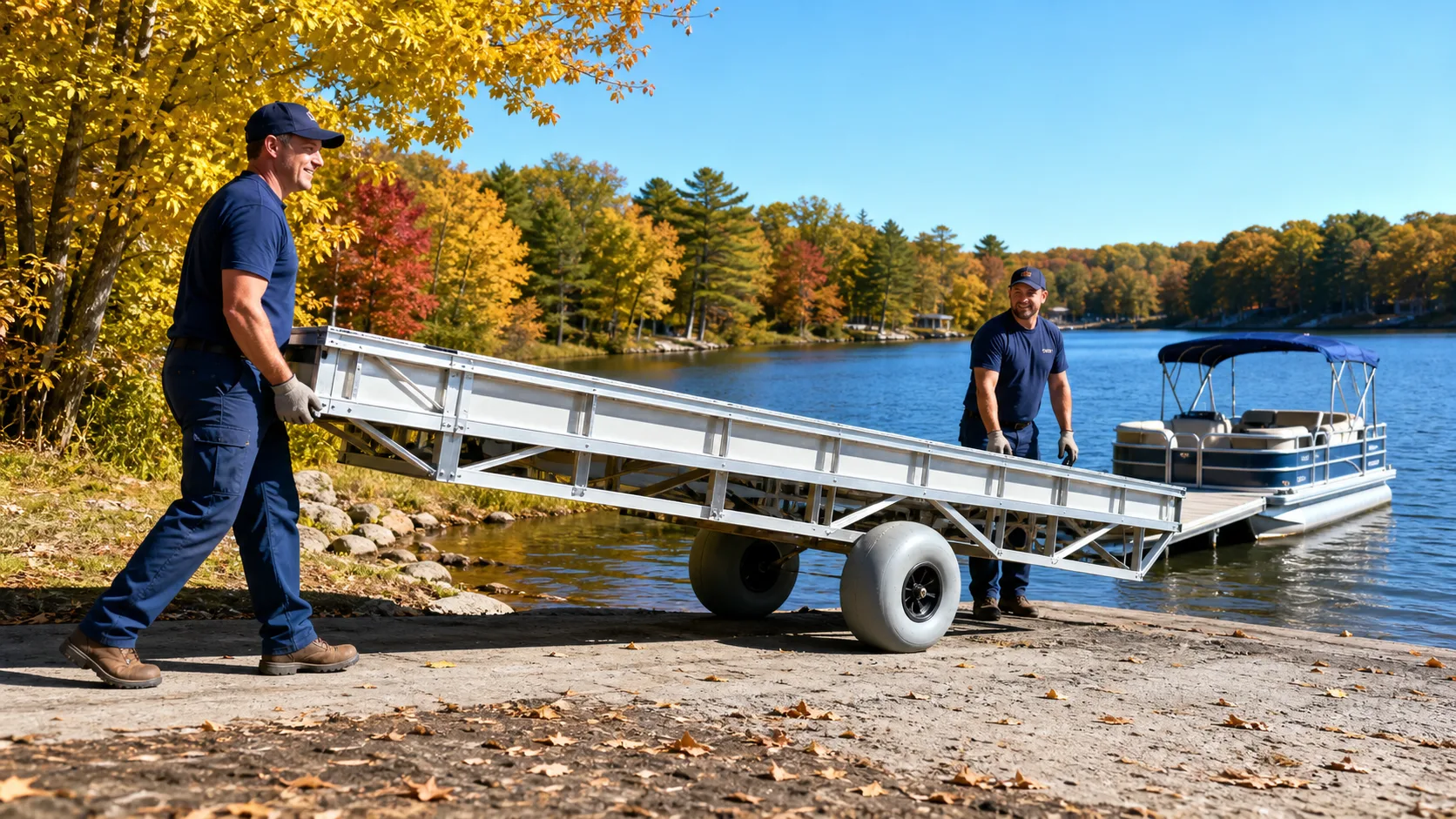
If you have a roll-in system, your dock wheel kits can be your best friend or your biggest headache. When they are in good shape and sized for your shoreline, you can move a large dock with a small crew. When they are worn out, every foot feels like a fight.
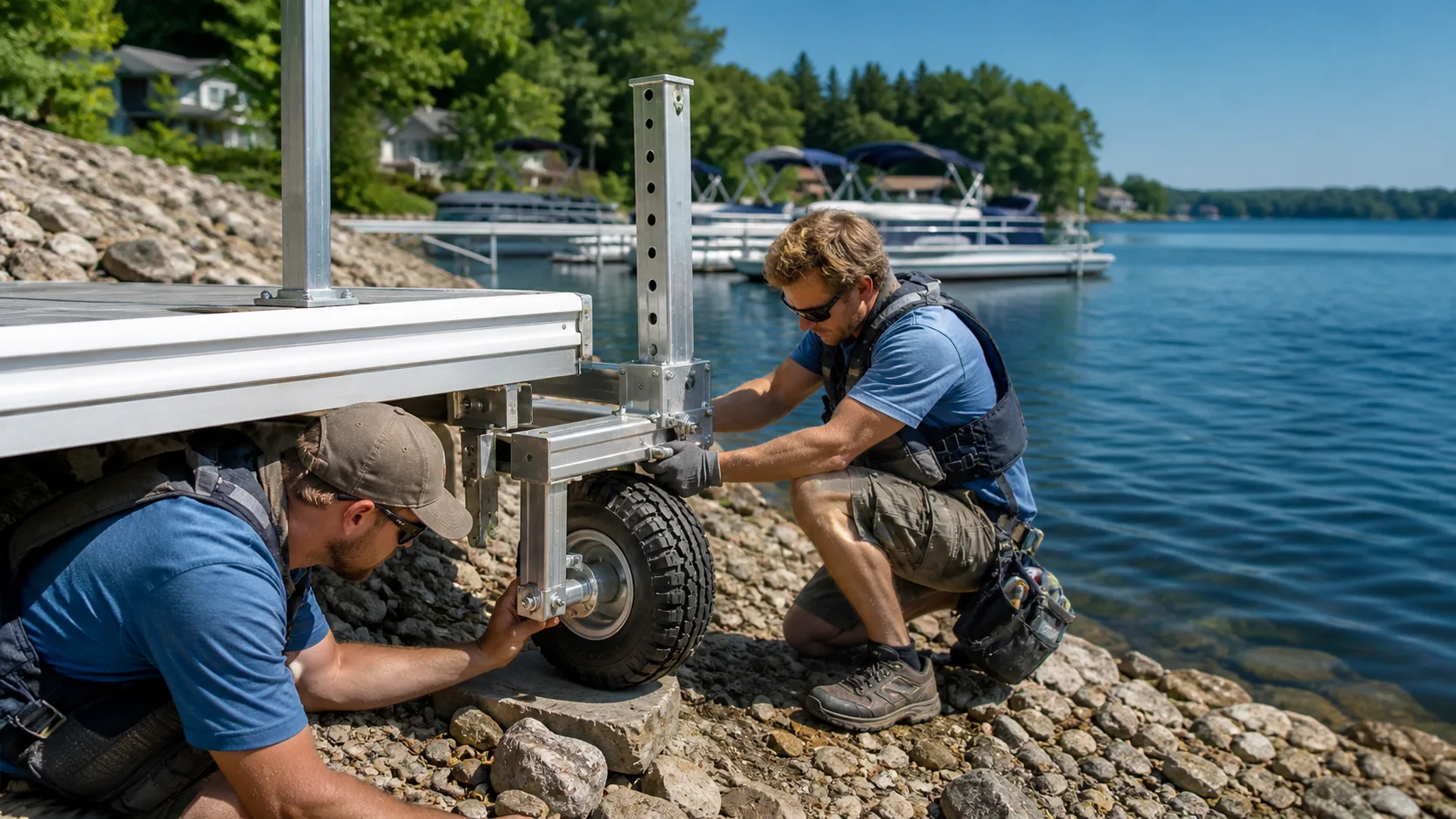
Before removal, inspect each wheel kit:
- Check rims for cracks or damage
- Press on tires to spot flats or waterlogged foam
- Look for bent axles or twisted mounting brackets
- Shake each wheel to feel for worn bushings or loose hardware
A stiff or wobbly wheel makes the whole frame harder to move and can dig into soft ground.
Think about your terrain too. Ask yourself:
- Are the wheels big enough for sand, mud, or weeds near shore?
- Do you hit rocks or ledges that catch the wheels every year?
- Would a different wheel style roll better on your slope or lake bottom?
Sometimes a small upgrade in wheel size or style makes a huge difference next fall, especially on tricky shorelines like we see around Minnesota and nearby states.
Before storage, give your dock wheel kits some simple care:
- Rinse off sand, mud, and vegetation
- Lubricate moving parts where the manufacturer recommends
- Tighten hardware so wheels and brackets do not rattle loose in transit
Secure any loose parts so nothing falls off while towing the dock sections up to their winter spot.
Plan Winter Upgrades for Stress-Free Spring Launch
The best time to plan fixes is while everything is still fresh in your mind. As you pull ramps, test winches, tighten fasteners, and roll out on your dock wheel kits, keep a simple punch list.
You can:
- Take quick photos of worn parts with your phone
- Label dock sections so you remember where each issue was
- Write down sizes or part numbers as you remove old hardware
Once your dock and lift are out of the water and stored, you have all winter to order replacement parts and accessories. Using the off-season gives you better lead time and makes it easier to get exactly what you need without rushing right before ice-out.
At Vibo Marine in North Branch, Minnesota, we design and build aluminum docks, boat lifts, and accessories that are meant to be pulled, stored, and relaunched year after year. When you turn this late-summer pull-out checklist into a yearly ritual, you protect that investment, cut down on emergency repairs, and keep your dock system ready for many seasons of easy, fun days on the water.
Get Started With Your Project Today
If you are ready to make launching and storing your watercraft smoother and safer, our dock wheel kits are designed to handle the job season after season. At Vibo Marine, we focus on practical, durable solutions that match the way you actually use your dock. Tell us about your shoreline, watercraft, and setup, and we will help you choose the right configuration. Have questions or need a custom recommendation before you order? Just contact us and we will walk you through your options.