Troubleshooting Roll-In Dock Wheel Kits on Steep Shores
Stop Fighting Your Steep Shoreline This Fall
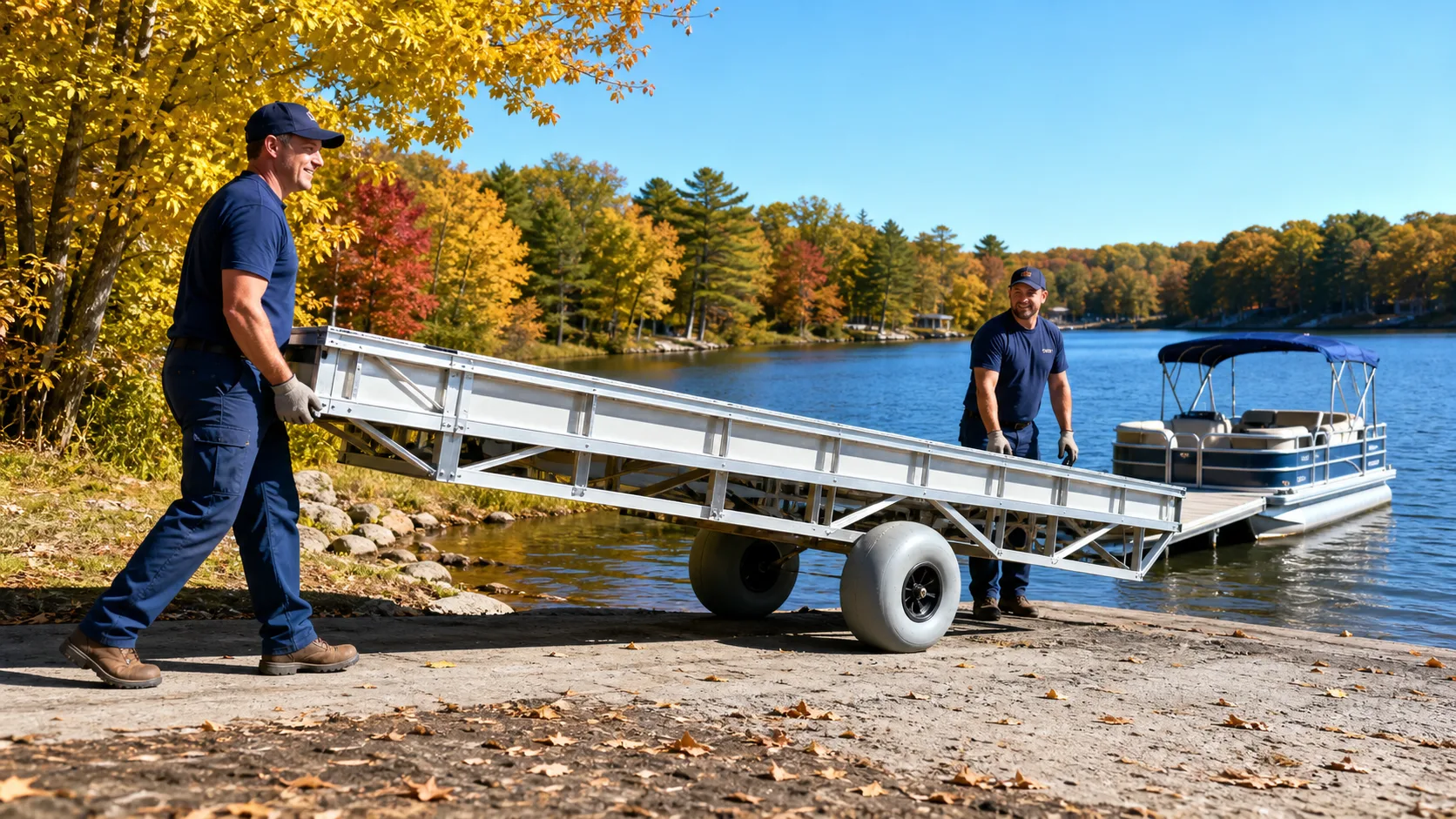
Seasonal dock removal on a steep bank can feel like a race against cold water and short daylight. The roll-in dock that feels light and easy in June can turn stubborn in late fall when wheels sink, frames twist, and ramps slam to a stop halfway up the shore. That is when people start pushing harder, pulling with machines, and risking real damage.
Roll-in boat docks are designed to make seasonal removal simple, but steep or uneven shorelines create their own set of problems. Sharp elevation changes, soft spots under the wheels, and awkward ramp angles all add stress to your dock and to the people moving it. We design and build aluminum docks and wheel systems every day, so we see these patterns often and know there are better ways to set things up.
This article walks through the main headaches on steep shores and how to prevent them. We will cover why steep banks are so tough on wheel kits, how to stop wheel sink, how to protect your dock frame from twist, and how to keep ramps from hanging up at the shoreline. The goal is simple: smoother, safer dock pullout in the fall and easier roll in again in the spring.
Why Steep Shores Punish Roll-in Dock Wheel Kits
Steep shorelines put gravity to work against your dock. When you pull a roll-in dock up a hill, the full weight of the frame and decking wants to run downhill. If the wheels are not evenly supported, that weight shifts into a few small contact points, and trouble starts.
Here is what is going on under the surface:
- Gravity pulls the dock downhill, loading the lowest wheel the hardest
- Wave action and changing water levels leave soft spots in the lake bottom
- Uneven soil makes one wheel dig in while another stays light or even hangs
- The dock frame tries to twist to follow these uneven supports
Soil type makes a big difference. On soft sand or muck, wheels can sink until the axle drags. In sticky clay, the wheel may not sink as far, but it can bind and refuse to roll. On rock, wheels can ride on points or edges, making the frame bounce and shift from side to side. When you add a sharp change in slope from the bank to shallow water, it creates a hinge point that can rack the frame as you push or winch.
On many steep sites, the transition from the shore ramp to the first dock section is the hardest part of the pull. If this spot is not set up well, the frame can twist, the wheels can misalign, and the whole dock can start tracking crooked up the hill. Understanding these site details is the first step to choosing the right roll-in boat docks layout and wheel kit setup.
Stopping Wheel Sink Before It Starts
Wheel sink is easier to prevent than to fix in the middle of a cold pullout. The best time to study your shoreline is late summer or early fall, when water levels are often lower and more of the lake bottom is exposed. Walk the route your dock uses and look for:
- Soft muck, silt, or deep sand underfoot
- Old wheel ruts from past seasons
- Sudden drops, holes, or ridges where a wheel might fall in
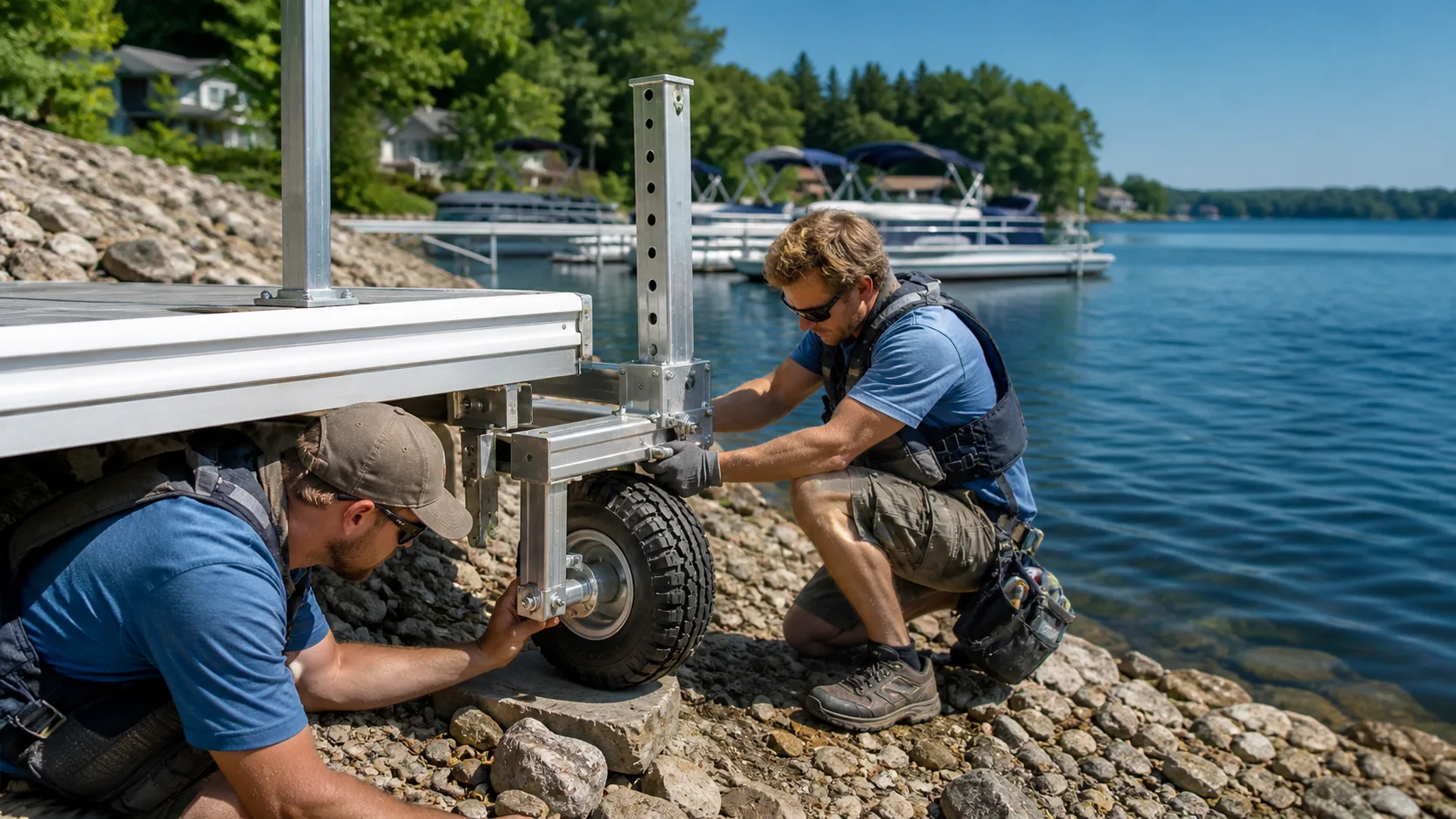
Once you know the weak spots, you can plan better support. On very soft bottoms, narrow wheels act like knives and dig in quickly. Wider wheel options spread the load across a larger area so the dock rides on top instead of sinking. In extra soft areas, adding wheel pads or small cribbing pads under the wheel path can keep the axles out of the mud.
On very steep or long runs, it can help to take some of the weight off the wheels. Mid-span support legs set just above the lake bottom during the season can be adjusted down a little before removal. This shifts some weight from the wheel axle to the support legs as you start to pull. In some cases, adding screw-type anchors with braces can also steady the dock so it does not sway and dig one wheel harder than the other.
Before fall pullout, it is also smart to give your wheel system a quick check:
- For pneumatic wheels, set tire pressure to a consistent level
- Make sure axles are straight and secure in the frame
- Clear weeds, sticks, and muck from the planned wheel path
A short walkthrough now can save a lot of strain on both your dock and your crew when it is finally time to roll it out.
Protecting Your Dock Frame From Twist and Racking
On steep shorelines, your dock frame is not just carrying weight, it is fighting twist. When one wheel hits a bump, sinks, or drops into a low spot, that side of the dock slows down while the other side keeps moving. This puts a twisting force into the aluminum frame that can bend or rack it over time.
Good layout is your first defense. On steep runs, shorter dock sections are usually easier to keep aligned than long ones. Shorter pieces reduce the leverage that can twist connections. It also helps to keep the dock square to the shoreline instead of running at an angle. When wheel kits are lined up straight and perpendicular to the slope, side loads drop and everything tracks better.
You can also give your frame more strength right where it needs it. In key transition areas, such as between the ramp and the first section, you may want:
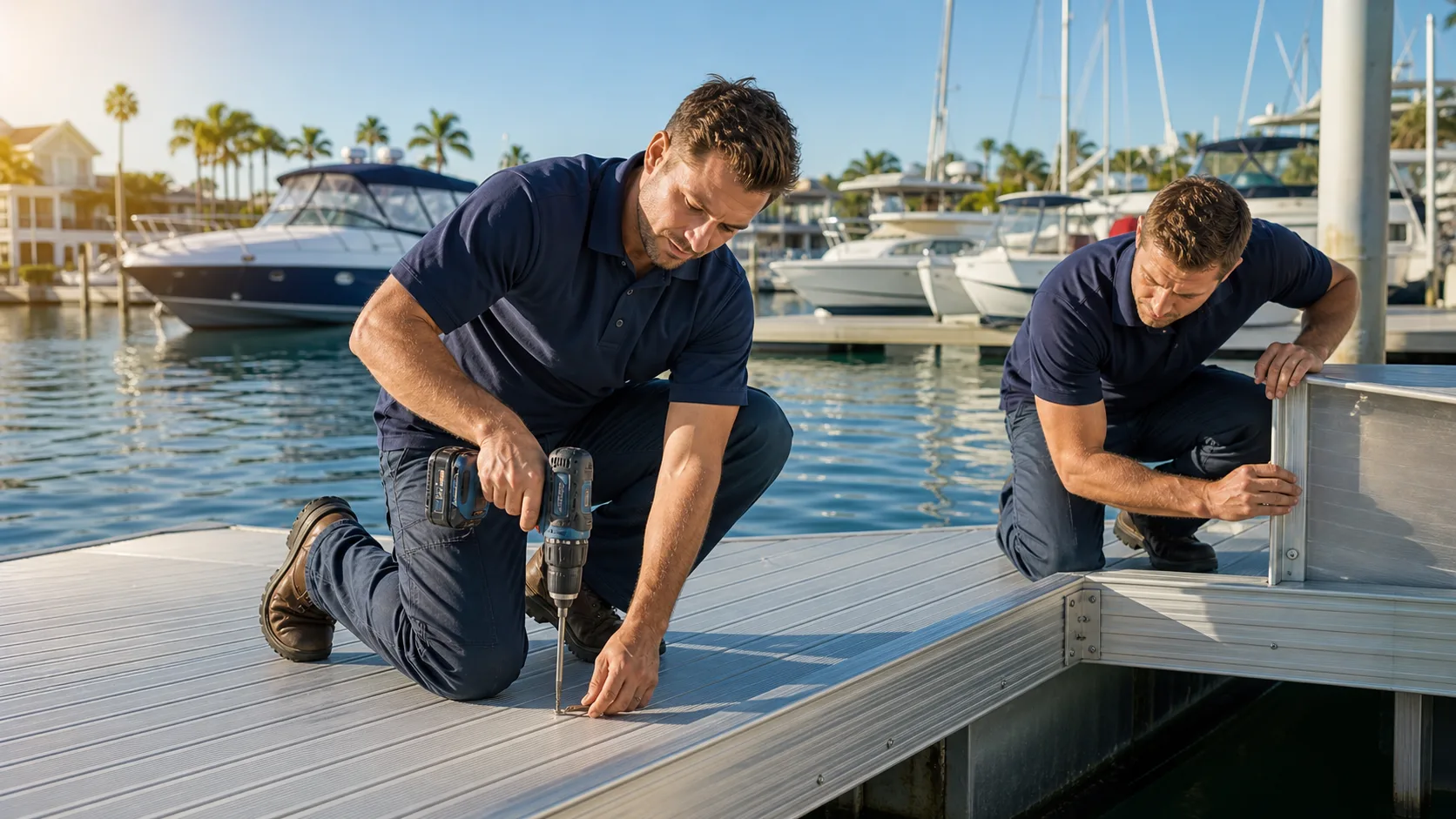
- Diagonal bracing to keep corners from racking
- Extra crossbars near wheel kits for stiffness
- Reinforced connection plates where sections hinge or pin together
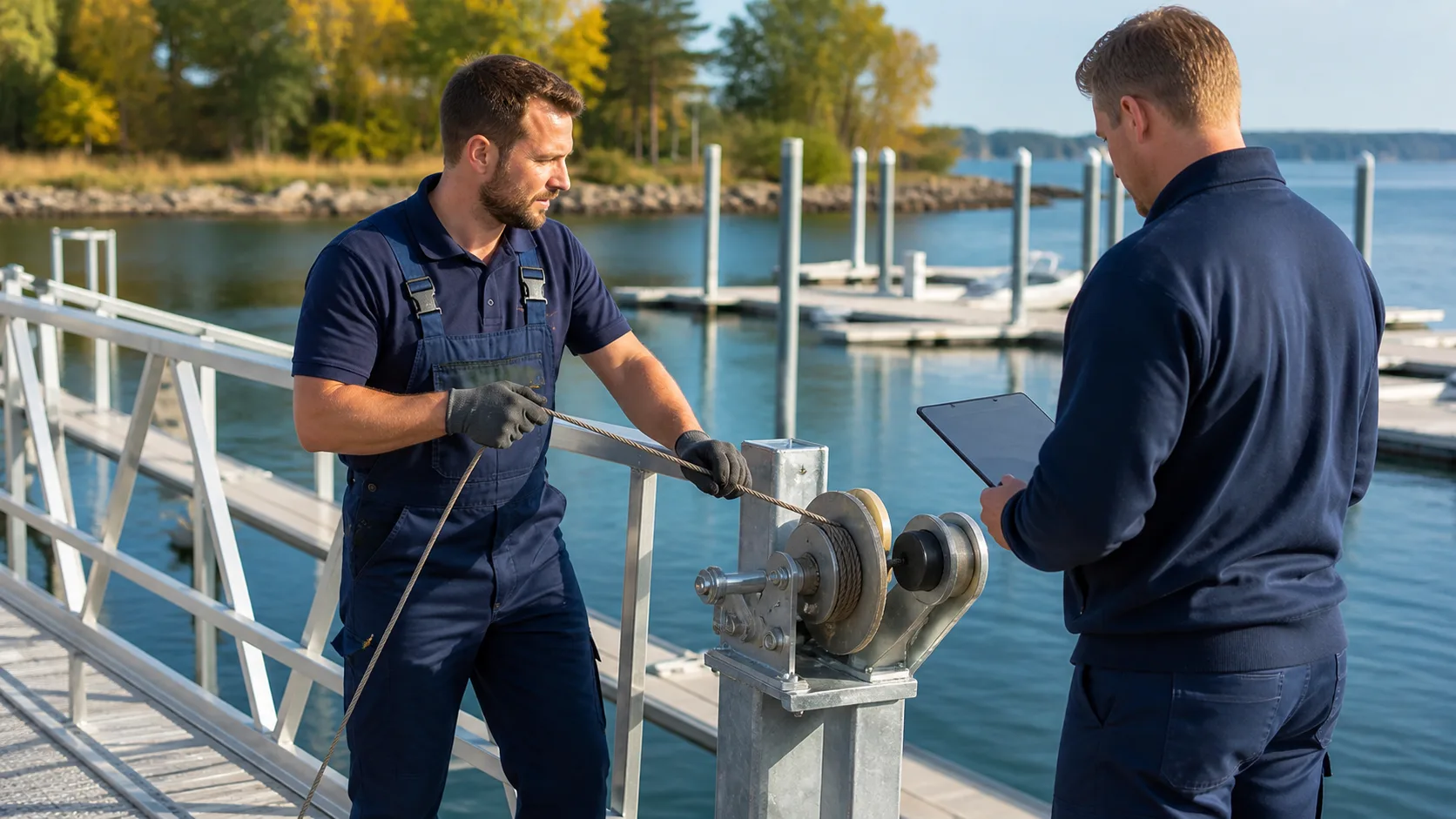
Pull method matters too. A winch that pulls from the center line of the dock at a steady angle gives you more control. Mounting the winch so the cable pulls straight up the slope instead of from the side helps keep everything aligned. Smooth, steady winch tension is better than jerky pulls that can twist the frame each time the dock hits a snag.
Eliminating Ramp Hang-Ups at the Shoreline
Many of the worst problems on steep shores happen right at the shoreline lip. That first edge where the shore ramp, seawall, or bank meets your dock is often where wheels bind, frames jump sideways, or the whole setup grinds to a stop.
Sharp lips cause the wheels to slam into a step instead of rolling over a smooth path. If one side hits first, the dock can pivot and try to climb sideways, which adds more twist and stress. When the slope changes quickly from flat to steep, that hinge point can also make the frame flex.
You can lessen these issues by designing a smoother approach. Adjustable shore-end ramps let you fine-tune the slope and height so wheels roll in a gentle line instead of bouncing over a drop. Small shims or blocking under the shore ramp can ease the angle and create a more continuous roll path.
On rocky or tiered shorelines, control is even more important. Helpful add-ons include:
- Guide rails along the ramp edges to keep wheels centered
- Low side curbs so the dock cannot walk off the path
- Alignment stakes or markers so you line up the same groove every season
Safety should stay at the front of your mind. Use spotters when pulling the dock, move slowly, and stop right away if the ramp hangs up. Never try to power through a stuck point with a vehicle or ATV. Extra brute force can bend frames, snap pins, or pull anchors loose.
Smart Upgrades and Seasonal Habits That Pay Off
Steep, tricky shorelines often need a few extra pieces and some smart habits to make seasonal moves easier. Over time, small upgrades can turn a stressful dock removal into a simple, steady routine.
For challenging sites, many owners find benefits in:
- Higher-capacity wheel kits that handle more weight on slopes
- An extra set of wheels under longer or heavier sections
- Modular ramp sections that can be re-positioned as water levels change
- Shore stairs or landings that give safer footing while guiding the dock
Good habits help too. During fall removal, take a few photos as you pull the dock up the shore. Snap shots of wheel locations, ramp angles, and support leg heights. Make a few quick notes about where the dock rolled well and where it dragged or twisted. Those details make it much easier to fine-tune your setup when spring comes.
As a factory-direct builder in North Branch, Minnesota, we work with many different shorelines, soil types, and slopes. Matching roll-in boat docks, wheel kits, and accessories to a specific shoreline is part layout, part hardware, and part experience. With the right plan, even a steep bank can be handled in a calm, controlled way, season after season.
Get Started With Your Project Today
If you are ready to upgrade your shoreline, explore our customizable roll-in boat docks designed for long-lasting performance and easy seasonal use. At Vibo Marine, we work with you to match the right layout, accessories, and configuration to your waterfront. Share your goals, measurements, and any unique site challenges, and we will help you plan a dock system that fits. Have questions or want a quote now? Just contact us to get started.