Roll-in Docks Made Easy: Guide, Types, and Installation Tips
Roll-in Docks That Work as Hard as Your Waterfront
A roll-in dock is built for people who want solid footing under their feet and a simple way to get their dock in and out of the water. Instead of wrestling with heavy sections or floating frames each season, you roll the dock along the shoreline on built-in wheels, adjust the legs, and you are ready to enjoy the water. For lakefront owners in Minnesota and beyond, that combination of stability and easy seasonal removal, is a big reason roll-in systems have become a favorite.
Roll-in docks sit in a sweet spot between basic sectional docks and more involved permanent options. You still get a homeowner-friendly system that you can install, adjust, and maintain yourself, but with faster seasonal changeouts and a more connected feel underfoot. At Vibo Marine in North Branch, Minnesota, we design and manufacture aluminum docks and boat lifts that we sell factory-direct, so you get well-built aluminum boat dock sections instead of flimsy, flexy parts from a big-box store.
How Roll-in Dock Systems Actually Work
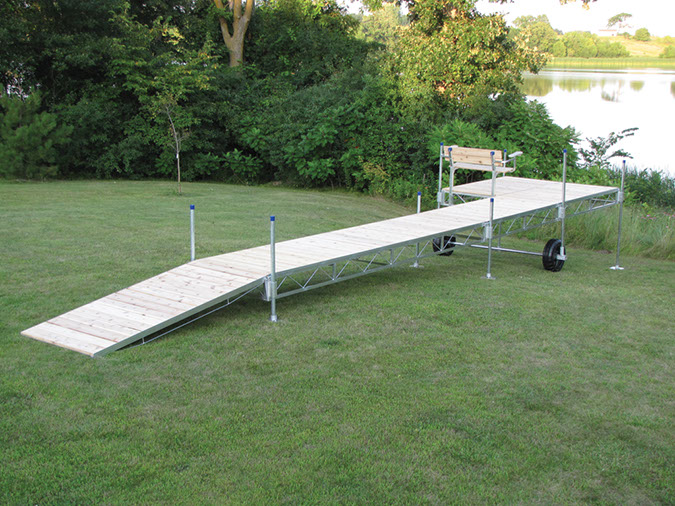
At its core, a roll-in dock is a series of aluminum boat dock sections connected to form your layout, supported by legs with wheels on the lake end. An aluminum frame provides strength without unnecessary weight. Decking panels, such as aluminum, cedar, or composite, sit on top of the frame, while hardware ties everything together. From there, you can add accessories like ladders for swimmers, benches for seating, and bumpers to protect your boat.
The wheeled legs do the heavy work. In spring, you set the dock at the shoreline, lower the legs to the right starting height, then roll the entire frame into the lake. In fall, you reverse the process and walk it back out of the water. Adjustable legs make it possible to keep the dock level even when the lake bottom has a slope or small dips and humps.
Compared to sectional docks, which you carry and assemble piece by piece in the water, a roll-in dock keeps everything tied together so setup and removal are quicker. Floating docks, on the other hand, sit on the surface of the water and are better for very deep or very soft bottoms. Roll-in systems shine when you have a reasonably firm lake bottom, mild to moderate slope, and you want a stable dock that goes in and comes out with a lot less effort.
Key Types and Configurations of Roll-in Docks
Roll-in dock layouts start simple and can be built out from there. Many waterfront owners are happy with a straight run that gets them out to their preferred depth. Others choose an L-shaped layout to create a protected inside corner for docking or loading. T-shaped docks add a large platform at the end that works well for multiple boats, swimming, or setting up chairs to watch the sunset.
Because you are working with aluminum boat dock sections in different lengths and widths, you can mix and match to create a layout that fits your shoreline instead of forcing your shoreline to fit the dock. A narrow approach with a wider end platform, a long straight run with a short side finger, or a stepped layout that follows a shoreline curve are all common. The number and type of watercraft you own, from fishing boats to pontoons and personal watercraft, also help determine how much dock space you will want.
Decking and accessories round out how your roll-in dock feels day to day. Aluminum decking is low maintenance and dries quickly. Cedar has a traditional look and stays comfortable under bare feet. Composite offers a different style and texture. There are also add-ons such as:
- Stairs for easier access from a steep shoreline
- Railings where you want a little extra security
- Benches and tables for gathering spots
- Kayak or paddleboard racks to keep gear organized
These details are what turn a simple dock into a space you actually enjoy using.
Choosing the Right Roll-in Dock for Your Shoreline
Every lakefront is different, so the right roll-in dock starts with where it will sit. Think about your lake bottom first. Firm sand or gravel is ideal for roll-in systems, because the wheels and legs have something solid to rest on. Light muck or silt can also work if it is not too deep, while heavy muck can make it harder to keep the dock stable. Water depth and how quickly it drops off are the next piece of the puzzle, because that affects leg length and how far out you need to go.
Wind and wave exposure matter as well. A calm bay or protected shoreline is easier on any dock, while open-water locations may call for a sturdier frame and careful layout to reduce wave impact. Access from the shore side plays a role too. A gentle slope down to the water works well with a roll-in dock. A high or steep bank might call for shore stairs, ramps, or a slightly different configuration to make the transition comfortable.
Quality in the frame, welds, and hardware pays you back every time you move or stand on the dock. A well-designed aluminum structure has enough rigidity to reduce bounce and flex when people are walking or when waves roll through, but is still light enough for a couple of people to handle with the wheels doing most of the work. Solid connections and corrosion-resistant hardware help keep sections tight and aligned so the dock feels connected and secure.
It is also smart to think a few years ahead. Will you add another boat, upgrade to a pontoon, or have more kids and grandkids using the dock? Choosing a modular roll-in system that lets you add more aluminum boat dock sections or accessories later means you will not have to start over when your waterfront needs grow.
Step-by-Step Tips for Easier Roll-in Dock Installation
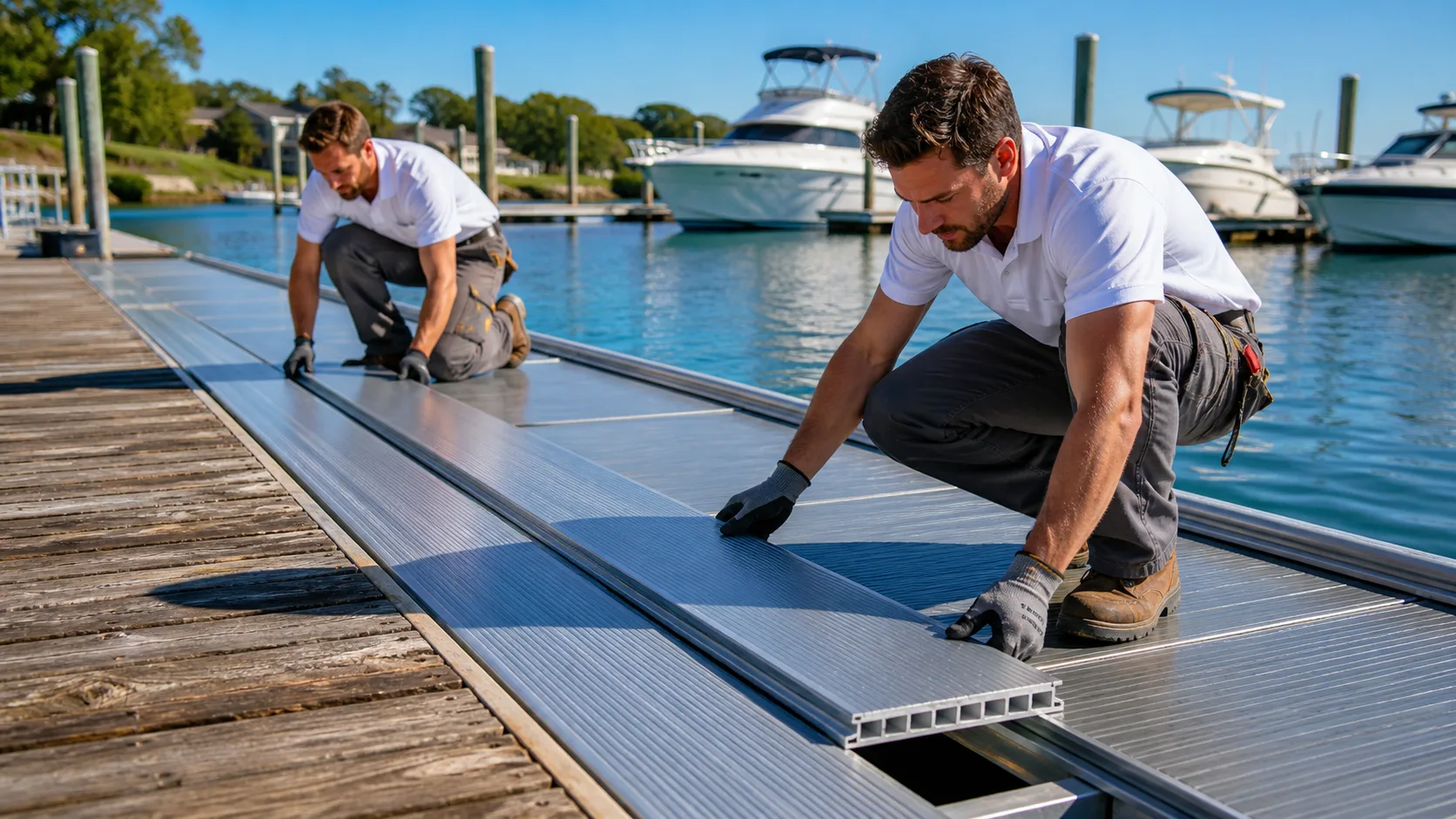
Installing a roll-in dock is straightforward if you take it step by step. Start on shore with a plan. Sketch your layout, decide where the first section will meet the shoreline, and check that you have all the hardware and tools you need. Stage your aluminum boat dock sections close to the water so you are not carrying them far.
From there, a basic process looks like this:
- Assemble and square the first dock section on shore
- Attach legs and wheels, setting the initial leg height based on your depth measurements
- Roll the first section partway into the water and roughly level it
- Connect the next section on shore, then roll and attach it to the first
- Keep adding sections, checking level and tightening hardware as you go
Practical safety and efficiency tips go a long way. Work with at least two people so you can guide and support the dock from both sides. Wear waders or old clothes you are comfortable getting wet. Use the leverage of the frame and wheels instead of trying to lift more than you need to. As you build, stop occasionally to check that everything is square, connections are snug, and legs are set firmly on the lake bottom.
Seasonal habits can make each year easier. Many lakefront owners mark leg heights or note water depths for each section so spring setup goes faster. In fall, pick a calm day to roll the dock out and rinse off algae or debris before storage. A quick annual inspection of frames, welds, decking, and hardware helps keep the system solid and ready for another season on the water.
Confident Next Steps for Your New Roll-in Dock
Roll-in docks are a smart choice for many lakefront properties because they balance strength, stability, and ease of use. A well-built aluminum system with modular boat dock sections lets you tailor the layout to your shoreline, roll it in and out without a struggle, and expand it as your waterfront life grows.
The best next step is to get familiar with your shoreline. Measure distances, note water depths at a few key points, and pay attention to bottom conditions and how exposed your dock site is to wind and waves. With that information and some simple photos, it becomes much easier to design a roll-in dock layout, choose the right aluminum boat dock sections and accessories, and create a waterfront setup that fits how you actually use your lake.
Get Started With Your Project Today
Upgrade your shoreline with our durable, easy-to-install aluminum boat dock sections designed to fit your waterfront and lifestyle. At Vibo Marine, we work with you to size, configure, and customize a dock system that can handle changing water levels and regular use. If you are ready to plan your project or have questions about layouts and accessories, simply contact us and we will help you take the next step.