Selecting Dock Replacement Parts for Aging Roll-in Systems
Keep Your Roll-in Dock Rolling Safely Into Next Season
End of the season is when many lake homeowners spot the same problems. Decking feels a little loose. Legs wobble when the waves pick up. Wheels are hard to roll. Hardware is rusty or starting to bend. An aging roll-in dock might still get you through the summer, but it is quietly telling you it needs attention.
Picking the right dock replacement parts is not just about looks. It affects how safe your dock feels under your feet, how hard it is to move in and out, and how well it protects your boat and water toys. In this guide, we will walk through how to check your roll-in system, what to fix first, and how to choose quality components before everything is locked in by ice or bad weather.
Spotting the Signs Your Roll-in Dock Needs Attention
A good time to inspect an older roll-in dock is late in the season when the water is usually lower and you are already thinking about taking it out. Move slowly, section by section, and give things a closer look.
Here is what to check on the structure itself:
- Frame rails for corrosion, dents, or twisting
- Welds for hairline cracks, especially near corners and joints
- Fasteners, bolts, and brackets for looseness or missing pieces
- Decking boards or panels for warping, soft spots, or sharp edges
Then check how the dock actually behaves when you use it:
- Does the dock sway more than it used to when you walk out?
- Are some sections sitting lower or higher than others?
- Do wheels feel stuck, flat, or hard to turn as you roll the dock?
- Do winches, cables, or pins feel rough, jumpy, or hard to operate?
Any of these signs means parts are wearing out. If they are ignored, small problems can turn into bigger ones. Loose boards become trip hazards. Weak legs or cracked frames can buckle under a crowd or a loaded cart. Worn wheels and hardware can fail during a fall storm or when ice starts pushing and pulling at the structure.
Prioritizing Dock Replacement Parts Before Winter
When you start spotting trouble, it can feel like a long list. The key is to focus on what matters most for safety and function, then work down to comfort and looks.
We usually suggest this order:
- Structural components, like legs, frames, and wheel kits
- Decking surfaces you walk and work on
- Accessories, bumpers, ladders, and cosmetic upgrades
Structural parts carry the loads and hold everything together. If a frame rail is bent or a leg is rusted thin, that moves to the top of the list. Decking comes next, because that is where feet, coolers, and pets spend their time. After those are sound, things like fancier bumpers or lighting can follow later.
Fall is often a smart time to order dock replacement parts. There is usually more time to plan, more flexibility to wait for parts to be built and shipped, and fewer weather surprises than in early spring. You can install at your own pace instead of rushing when the first warm weekend hits.
When you are balancing budget and long-term value, think in seasons, not weeks. Higher quality aluminum parts, stainless steel hardware, and durable wheels often pay off by:
- Reducing how often you need to replace parts
- Standing up better to ice and fluctuating water levels
- Staying lighter and easier to move for years to come
Upgrading Key Components on Aging Roll-In Systems
An older roll-in dock does not always need a full replacement. Many homeowners start with a few smart upgrades that make a big difference.
Common upgrade paths include:
- Swapping older wood decking for low-maintenance options
- Adding heavier-duty or adjustable leg assemblies for more stability
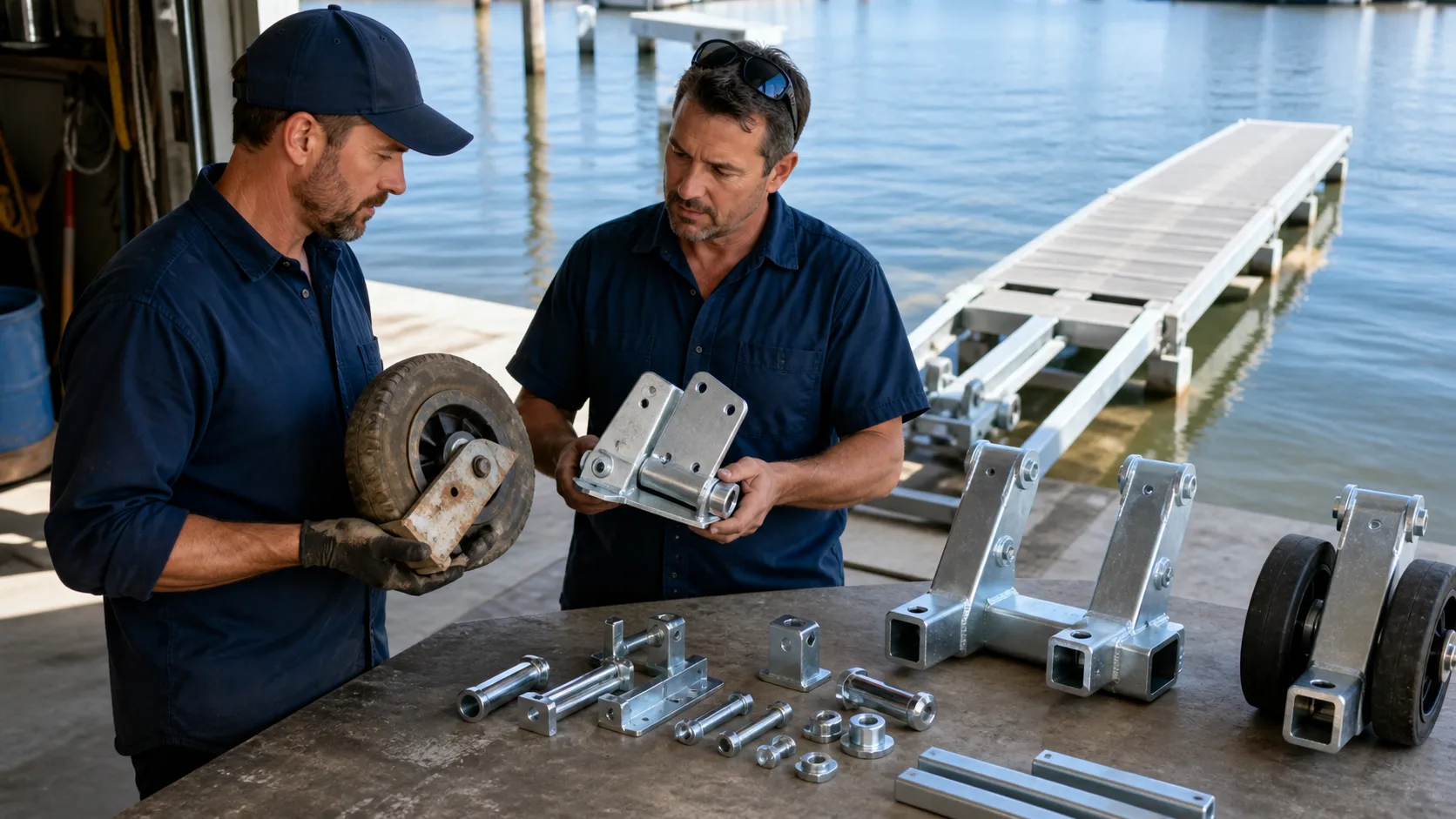
- Moving to larger, more durable wheels that roll more easily over soft bottoms
- Updating winches or related hardware to make moving the dock less work
Compatibility matters any time you mix new dock replacement parts with an older frame. Before you order, make sure you understand:
- Rail shapes and profiles so brackets fit correctly
- Bolt patterns and hole spacing on joints and hinges
- Leg size and style, round or square, and how they attach
- Weight capacity of both the existing frame and the new parts
Modular aluminum systems are designed with upgrades in mind. With a modular style, parts are made to work together as a system, not as one-off fixes. That means:
- Sections can be rearranged or added over time
- Legs, brackets, and wheels are built around matching profiles
- Future changes usually mean swapping parts, not starting over
Choosing Factory-Direct Parts for Long-Term Reliability
When it is time to buy, you usually have a few choices: generic parts, used pieces from a neighbor, or factory-direct components made for your style of dock. Each path has trade-offs.
Generic or used parts may seem easy to grab, but they can bring headaches:
- Bolt holes that do not line up
- Mixed metals that corrode faster together
- Unknown weight ratings or hidden damage
Factory-direct parts, ordered from a manufacturer that designs and builds docks, are made for precise fit and consistent quality. You also get people who understand how the pieces work together, which is helpful when you are trying to keep an older roll-in system going strong.
Before you order, gather a few key details:
- Brand and age of your dock, if known
- Section lengths and widths
- Typical water depth range by your shore
- Bottom conditions, like sand, rock, or muck
- Photos of problem areas and existing hardware
For lake homeowners in the Upper Midwest, working with a Minnesota-based facility that deals with similar ice, wind, and shoreline types can make problem-solving easier. They know what freeze and thaw cycles can do, how water levels can swing, and which parts are most likely to wear out first in local conditions.
Plan Your Fall Dock Refresh and Hit Next Spring Ready
A simple fall checklist can turn a tired roll-in dock into a dock that feels almost new when the ice goes out. Start by walking the full length and making notes. Take clear photos of worn parts, loose joints, and sections that feel off. Measure legs, rails, and sections so you have numbers handy when you discuss parts.
A little planning now sets you up for easier, more carefree summers. Thoughtful dock replacement parts, chosen to match your system and shoreline, mean a dock that rolls smoother, sits more solid, and needs less fuss year after year. With the right upgrades in place before winter, you can spend the first warm days on the water, not wrestling with repairs.
Get Started With Your Project Today
When you are ready to upgrade or repair your dock the right way, we are here to help you choose the exact dock replacement parts you need. At Vibo Marine, we focus on durable solutions that match your setup and conditions so your dock performs season after season. If you would like guidance before ordering, reach out through our contact page and we will walk you through the options.