Questioning Floating Dock Systems for Steep, Rocky Shorelines
Questioning Floating Dock Systems for Steep, Rocky Shorelines
Steep, rocky shorelines look beautiful, but they are not easy when it comes to dock planning. Many lake homeowners start by looking at floating dock systems because they seem like a quick, simple answer for tricky water. For some shorelines, that works fine. For others, it leads to wobble, stress, and repairs.
In this article, we will walk through where floating dock systems make sense and where they cause headaches, especially on steep and rocky sites. We will talk about ice, waves, access, and real day-to-day use, and share questions to ask before you buy. The goal is to help you see past the brochure pictures so you can choose a dock and lift setup that actually fits your shoreline.
The Real Challenges of Steep, Rocky Shorelines
A steep, rocky shoreline looks solid, but it can be one of the hardest places to put a dock. Large rocks, drop-offs, and uneven lake bottoms make it hard to get solid footing. Instead of clean sand you can walk on, you might have:
- Big boulders at the waterline
- Deep cracks between rocks
- Sharp ledges that fall off fast
- Uneven pockets where muck collects
All of this affects how any dock system can be supported and anchored. On top of that, many lakes in Minnesota and across the Upper Midwest see big water level swings. When water rises and falls over the season, a steep grade turns small changes into big height differences where your dock meets shore.
Ice makes things even more difficult. In winter, sheets of ice can push, lift, and twist against anything set in the water. On a rocky shoreline, ice can grip around stones and then pull on dock parts as it moves. Wave action is also harder to handle on exposed rock. When wind blows straight into your shoreline, waves can slam floats, frames, and hardware again and again.
All of these conditions feed into safety issues. Without careful planning, you can end up with:
- Odd angles where the ramp meets shore
- Big steps up or down between sections
- Slippery rock gaps someone has to step across
That makes it harder and less safe to carry coolers, gear, or help kids and guests onto boats.
Where Floating Dock Systems Shine and Where They Struggle
Floating dock systems are not “bad.” They simply fit some sites better than others. They often work well where:
- The lake bottom is very soft or very deep
- The shoreline slope is mild
- The area is in a protected bay
- Wave action is usually gentle
In those situations, floats keep the walking surface close to a steady height as water rises and falls. You are not trying to set legs on rock or adjust for big depth changes across short distances.
Trouble starts on steep, rocky shorelines. To reach deep enough water, a floating system usually needs a long gangway at a sharp angle. That can feel like walking up or down a moving ladder. On a wavy day, sections can bob and twist under your feet, which feels unstable for kids, older adults, or anyone carrying gear.
Anchoring is another big issue. Floats must be held in place with cables, posts, or weights. On rocky ground, it can be hard to set anchors where they need to go. If they shift or loosen, the dock can swing, rub against rock, or drift out of line. Long-term, most owners do not plan for:
- Wear on hinge pins and brackets from constant movement
- Damage from sections banging into rock in storms
- Extra checks and adjustments after high wind or ice-out
What looked “simple” at first can turn into ongoing tinkering and upkeep.
Stability, Ice, and Access You Cannot Ignore
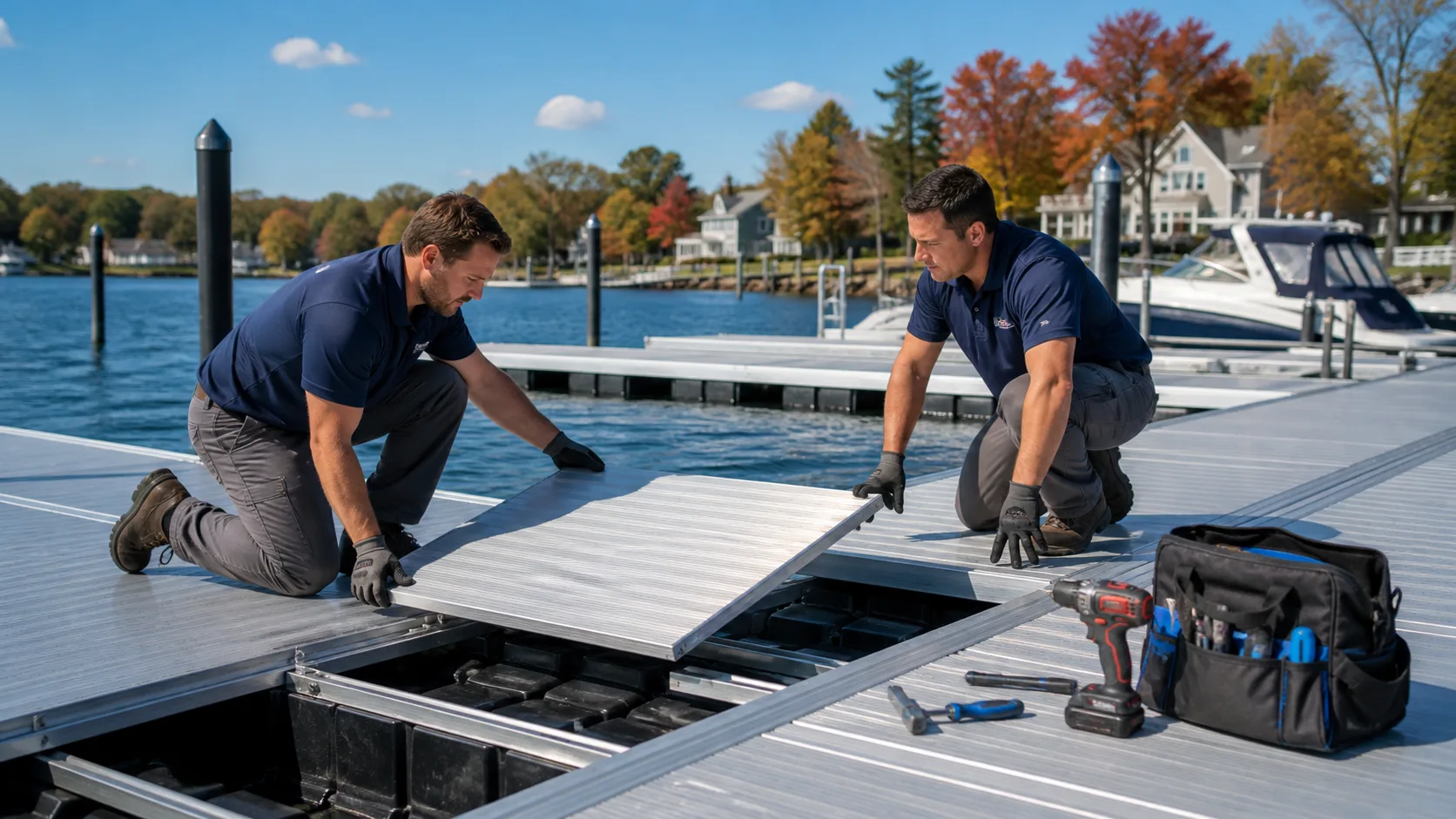
On a steep, uneven site, stability underfoot is one of the most important details. Many homeowners find that vertical lift systems or sectional aluminum docks with solid supports feel more secure than floating dock systems in this type of water. With the right design, legs can be set on stable points, and sections can be leveled so the walking surface feels firm and predictable.
Winter is another big factor. Floating dock systems stay in the water unless removed, so ice and shifting slabs press against:
- Float tanks
- Hinges at shore and between sections
- Anchor chains or cables
In lakes with active ice, that can mean more wear and risk. By comparison, a well-planned aluminum dock or lift can often be raised, rolled, or fully removed before freeze-up, so it is not taking the full hit from moving ice.
Access may be the most important part for daily life. On a tricky shoreline, the difference between a frustrating setup and an easy one often comes down to how you get from shore to dock. Thoughtful use of:
- Shoreline platforms
- Stairs with handrails
- Short, properly angled ramps
can turn a tough approach into a safe path. That matters every time grandparents step down to the water, kids run back and forth with towels, or someone pushes a cart loaded with food and gear.
Design Questions to Ask Before Buying Any Dock
Before deciding on floating dock systems or any other style, it helps to step back and study your shoreline. Here are useful site questions to ask:
- How steep is the slope from cabin to water, and over what distance?
- Where are the large rocks, ledges, and drop-offs?
- What is the typical water depth at 10, 20, and 30 feet out?
- Which way do strong winds and waves usually come from?
- How does the ice move and break up near your property each spring?
Then think about ownership and maintenance, not just the first install. Ask any dock provider:
- How is this system installed and removed each season?
- What happens to it in a major storm or strong west wind?
- How do we adjust heights if water levels change?
- Which parts tend to wear first in rougher conditions?
It helps to gather photos, rough measurements, and notes on water levels and ice patterns over a few seasons. With good information, you are far more likely to get a dock design that fits your shoreline instead of a one-size-fits-all answer that sounds easy but fights your site.
How Vibo Marine Thinks About Tough Shorelines
At Vibo Marine in North Branch, Minnesota, we see steep, rocky shorelines all the time. Many lakes in our region have exposed points, deep drop-offs close to shore, and active ice. Over the years, we have learned that the right layout often matters more than the label on the system.
Our focus is on aluminum docks, boat lifts, and accessories that can be adjusted and configured for the real shape of your property. Depending on your site, that might include:
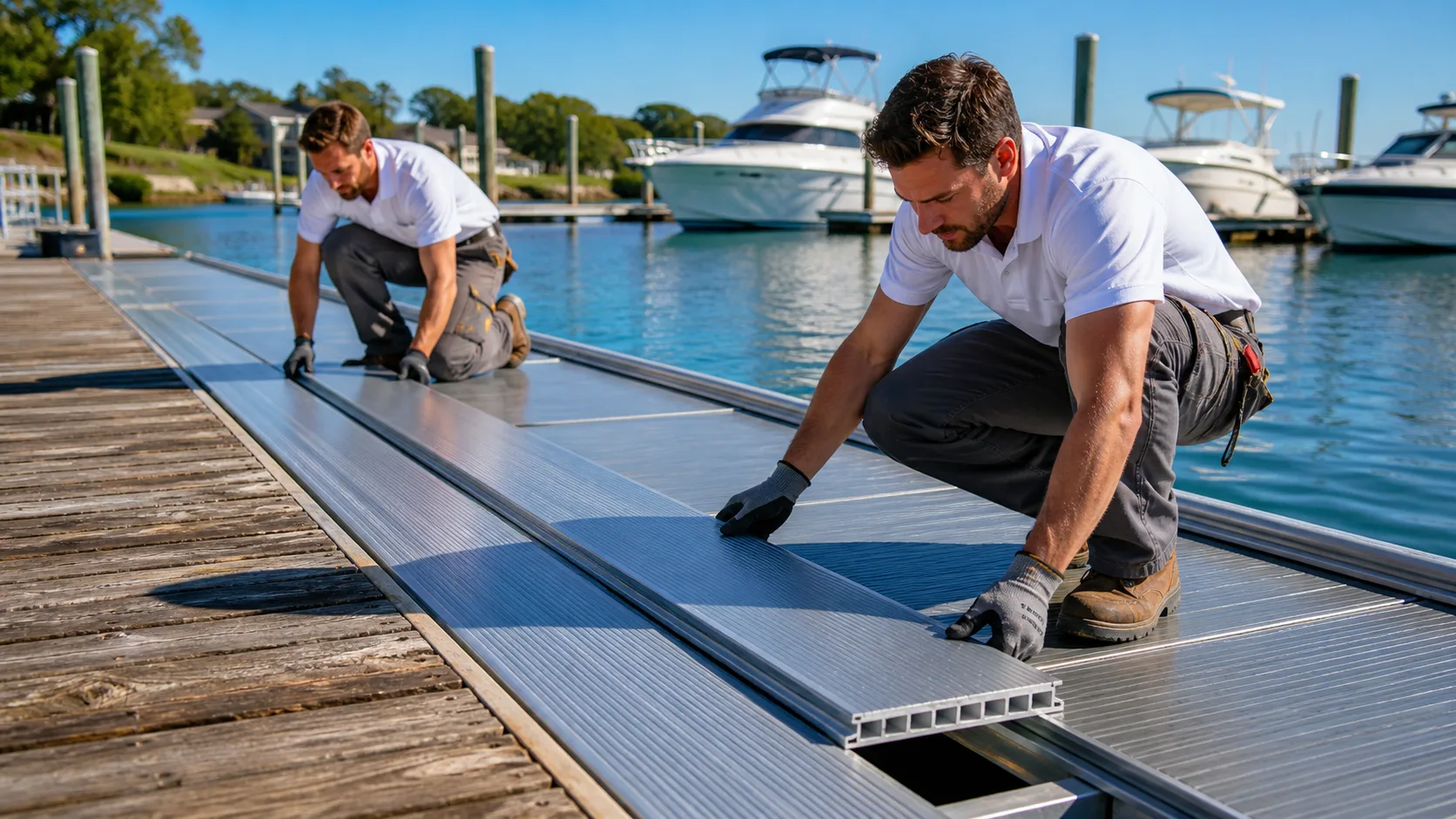
- Sectional dock layouts with adjustable leg supports
- Shoreline platforms that create a level “landing spot” at the water’s edge
- Stair and ramp options to smooth the transition from yard to dock
- Lift setups planned for the depth, wave action, and boat style you have
By designing around slope, rock, wind, and ice, we can often create solutions that feel more stable and safer than floating dock systems on tough shorelines. Seeing and testing different configurations in person can also help you understand how each style will feel and work for your family.
The goal is simple: to turn a steep, rocky shoreline from something you fight every season into a safe, comfortable home base on the water that you enjoy using every single day.
Get Started With Your Project Today
If you are ready to upgrade your waterfront with durable, low-maintenance floating dock systems, our team at Vibo Marine is here to help you plan every detail. We will walk you through layout options, materials, and accessories so your dock fits how you actually use the water. Tell us about your shoreline, your boat, and your goals, and we will recommend a solution that makes sense. To discuss your project or request a quote, simply contact us today.