Aluminum vs. Cedar vs. Plastic Dock Decking: Slip, Heat, and Cleanup
Make Holiday Weekends Easier on Your Dock
Holiday weekends on the lake are a lot of fun, but they are not easy on your dock. Boats come and go all day. Kids run back and forth. Coolers, lawn chairs, towels, and snacks land everywhere. By Sunday night, your dock decking has seen it all.
When the surface is wet, covered in crumbs, and sitting under hot sun, the material you picked really starts to matter. Many lakefront owners compare aluminum dock decking panels, cedar, and plastic and wonder which one truly holds up. The big questions are simple: Which is safer when wet, which stays comfortable for bare feet, and which cleans up fast so you can get back to relaxing?
Safety First When Wet: Slip Resistance That Matters
Water on a dock is no surprise. But add in sunscreen, fish slime, spilled drinks, and wet towels, and you can get a slick surface fast. A fall on a dock is not just a little bruise. It can mean cuts, broken bones, and a bad end to a good weekend.
Here is how the three common decking choices compare when things are soaked:
- Aluminum dock decking panels often use punched, ribbed, or textured patterns that shed water instead of holding it in puddles.
- Cedar starts naturally grippy, but over time algae, mildew, and worn finishes can turn it into a slippery film.
- Plastic decking may have molded texture, but puddles and lotions stick to the surface and can cut traction if it is not cleaned often.
With aluminum panels, water drains through the openings or off the surface quickly. The grip feels about the same on a dry weekday morning as it does after a sudden rain shower. That kind of predictability is a big deal when kids are racing around barefoot or guests are walking in slick flip-flops.
Cedar can stay safe if it is cleaned, brushed, and sealed on a regular schedule. Grooved boards help, but the fibers still soak up water. Once algae and mildew settle in, even light foot traffic can polish certain spots smooth. Plastic decking depends a lot on the brand and pattern. Some styles do better than others, but textured plastic with a layer of biofilm on top can feel like a bar of soap.
On real holiday weekends, nobody is checking lab test ratings. People are coming off the boat, dripping and distracted. A decking surface that gives you consistent grip in those moments makes the whole dock feel calmer and safer.
Barefoot Comfort in August Heat
On an Upper Midwest lake in late summer, the dock lives in bright sun most of the day. The breeze feels nice, but the surface under your feet can get hot. Kids sprawl out to fish. Dogs pace the edge. Adults stand for long chats with neighbors in their boats. Barefoot comfort is more than a luxury, it is part of how much you enjoy your space.
Aluminum dock decking panels reflect some of the sunlight that hits them, instead of soaking in all of it. Open profiles let air move underneath so heat does not build up as much. Once a cloud passes or someone splashes water up from the lake, aluminum cools down quickly.
Cedar usually runs cooler than dark composite or plastic boards, especially when it is newer and lighter in color. Over time, though, cedar can dry, darken, and raise its grain. That rougher texture can lead to splinters and hot spots that do not feel great under bare feet. Stains or paints in darker shades will also collect more heat.
Plastic decking is all about color and design. Lighter colors tend to feel better, but many docks end up with medium or darker tones. Solid, heavy boards hold onto heat longer, even after the sun drops. Slotted plastic can be better, but the material still behaves like plastic. It warms, it stays warm, and it can be unpleasant to stand on during the middle of a sunny day.
Along with temperature, the tiny details matter:
- Smooth transitions at seams so toes do not catch
- Clean, finished edges where kids like to sit and dangle their feet
- A surface that feels the same from one end of the dock to the other
When the whole dock feels even and comfortable, you do not have to think about where you walk or sit. You just enjoy the water.
Fast Cleanup After High-Traffic Lake Days
By the end of a busy weekend, the dock can look like a trail mix of lake life. Sand, grass, fish scales, spilled soda, snack crumbs, sunscreen smears, and muddy paw prints all end up on the boards. Nobody wants to spend hours scrubbing when they should be winding down.
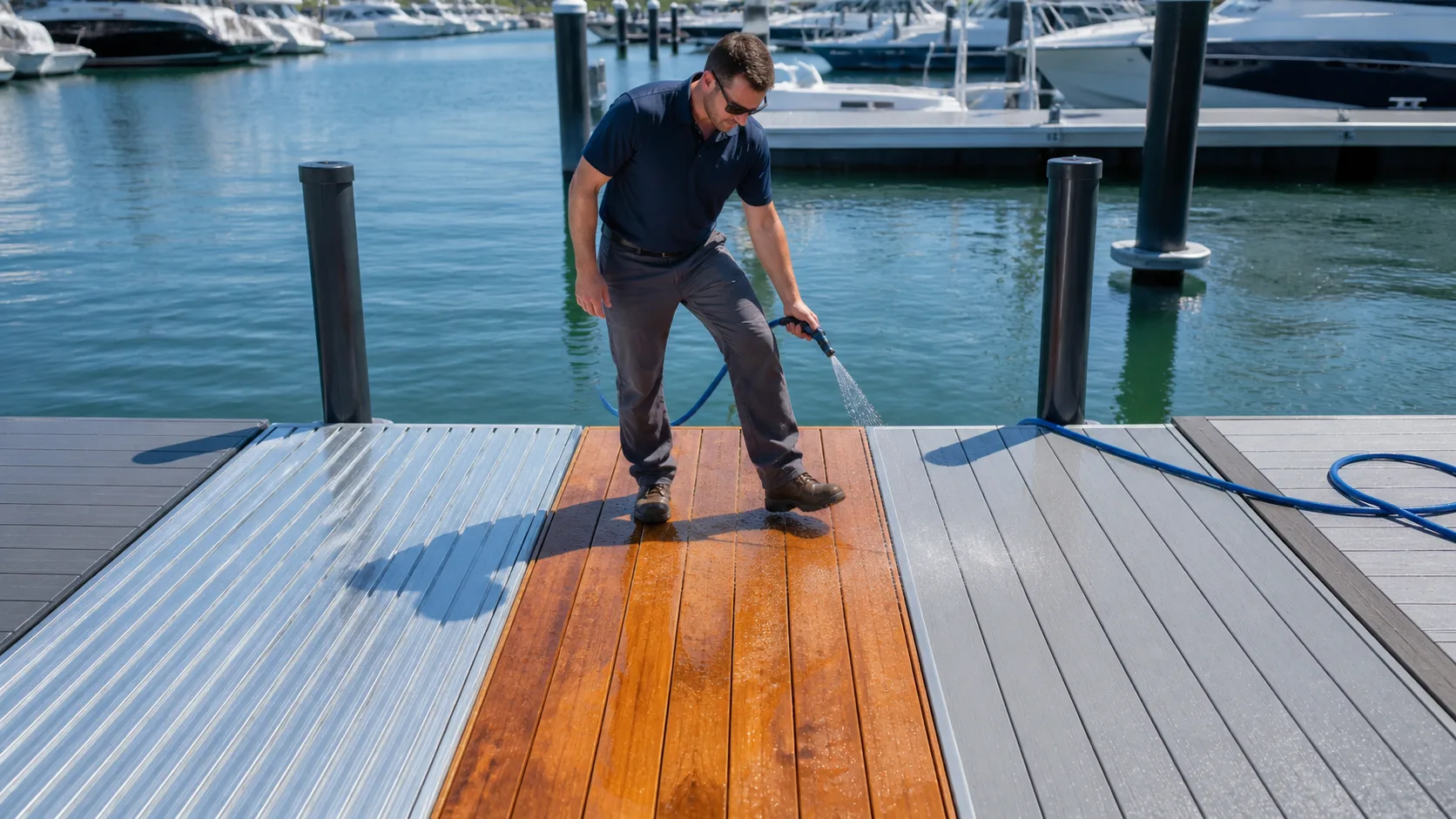
Aluminum dock decking panels shine here. With many designs, a simple rinse with a hose sends most of the mess back into the lake or off the sides. Punched or slotted patterns let fine sand, small leaves, and crumbs fall through instead of sitting on top. Sticky spills usually release without much scrubbing, because aluminum does not soak in liquids.
Cedar is more of a sponge. The grain holds moisture, sand, and organic matter. Stains from drinks or fish can set into the wood fibers. Regular cleaning often means a brush, cleaner, and elbow grease, especially if you want to prevent algae and dark spots.
Plastic decking sits in the middle. It will not rot, but it can stain from food, sunscreen, and tannins that wash off boats or leaves. Many plastic boards have a deep texture that traps grime. Those grooves can be harder to clear with just a hose.
Fast cleanup is not only about looks. When you can rinse the dock on Sunday night or Monday morning and call it good, you cut down on the need for deep cleaning later in the season. That means more weekends spent on the water and fewer spent fussing with the surface under your feet.
Durability and Maintenance Over Many Summers
Holiday weekends add up over time. Chair legs scrape, anchors get dropped, coolers slide, and the sun beats down day after day. In northern climates, like around our home base in North Branch, Minnesota, docks also face ice, freeze-and-thaw, and seasonal moves in and out.
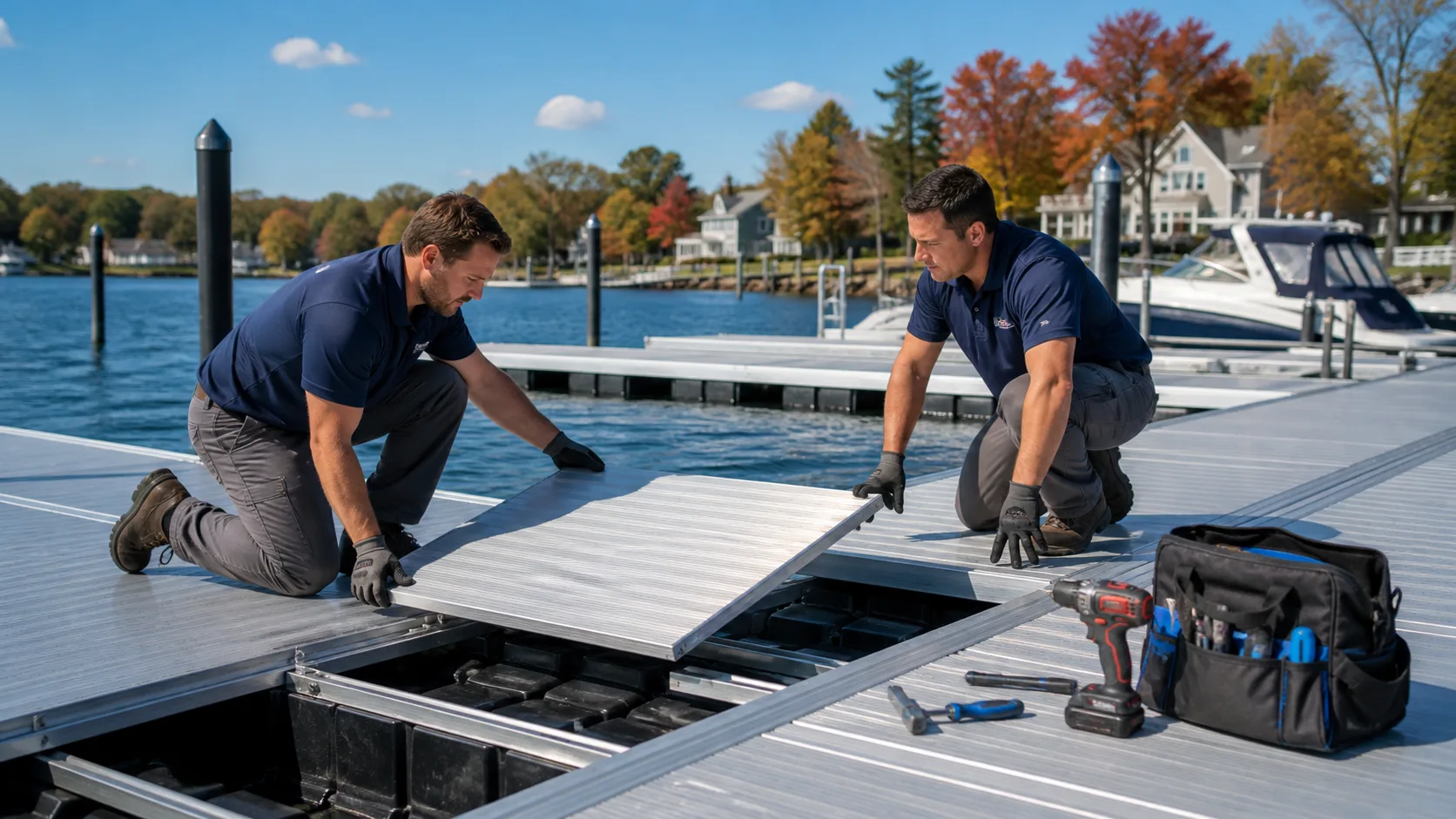
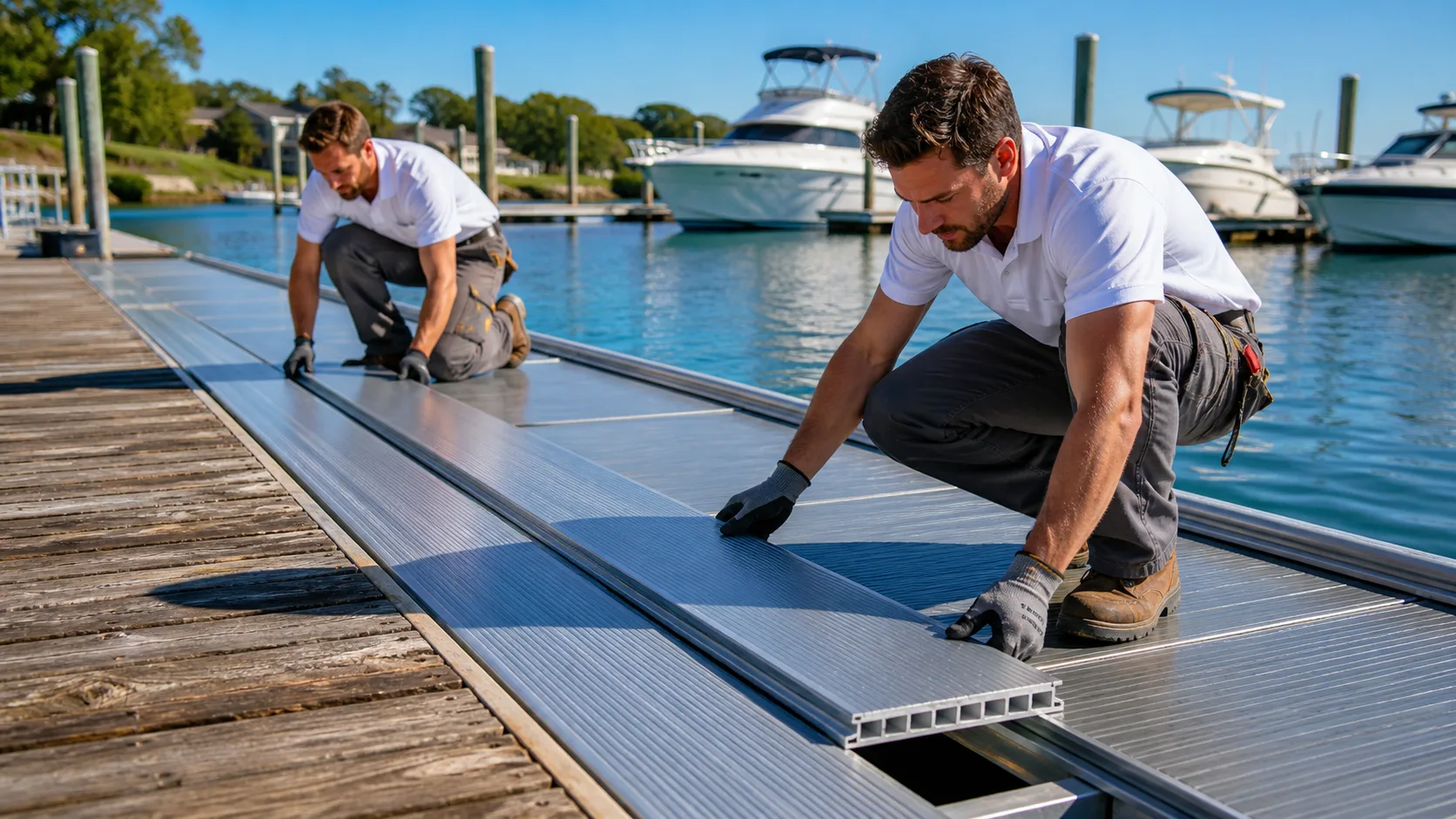
Aluminum dock decking panels handle these cycles well. Aluminum will not rot, swell, or attract insects. There is no need to seal or stain it. Many systems are built so that panels lift out easily, which helps with off-season storage or swapping panels if one gets damaged.
Cedar brings a classic look and a natural feel. But keeping it in good shape takes ongoing work:
- Periodic cleaning
- Sealing or staining to fight UV and water
- Watching for cupping, warping, or rot
- Sanding or replacing boards if they splinter
Plastic decking resists rot and insects, but the surface can fade or chalk with long UV exposure. Some products may flex or sag, especially under heavy point loads like grills or large dock boxes. If boards move or change shape, you may need to adjust or replace them to keep the surface safe and even.
Seasonal transitions are another test. Ice movement, shifting water levels, and repeated install and removal will stress any dock. Materials that do not absorb water or crack easily through cycles of freezing and thawing will save you time and surprises. Less worry about damage means more confidence when you walk out for the first weekend of the year.
Choose the Right Dock Surface for Your Lake Life
When you look at safety, heat, cleanup, and long-term wear together, aluminum dock decking panels offer a strong balance. They keep traction more consistent in wet, messy conditions. They cool down quickly once the sun shifts. They rinse clean without much effort. And they stand up to years of busy lake traffic with very little upkeep.
That does not mean cedar or plastic are always wrong. Some owners love the look and feel of wood and are happy to stay on top of the maintenance. Others have lighter plastic that works fine for a quieter dock with fewer guests. The right choice comes down to how you use your lake place: lots of kids and pets, big holiday gatherings, or calm mornings and quiet evenings.
At Vibo Marine, we design and build aluminum dock systems and boat lifts to make lake time simpler and more enjoyable. We work directly with lakefront owners from our facility in North Branch, Minnesota, so we see how docks actually get used on busy summer weekends. When you are ready to upgrade your decking or plan a new setup, aluminum panels are worth a close look for safer footing, cooler toes, and easier cleanup all season long.
Get Started With Your Project Today
Upgrade your shoreline with durable, low-maintenance aluminum dock decking panels engineered to handle changing water levels and everyday use. At Vibo Marine, we help you choose the right configuration so your dock works the way you need it to all season long. Share a few details about your waterfront and we will recommend a setup that fits your goals and budget. If you are ready to talk options or request a quote, contact us today.