Dock Wheel Kit Fit Guide: Tire Size, Axle Length & Bracket Placement by Slope
Smoother Spring Launches Start with the Right Wheels
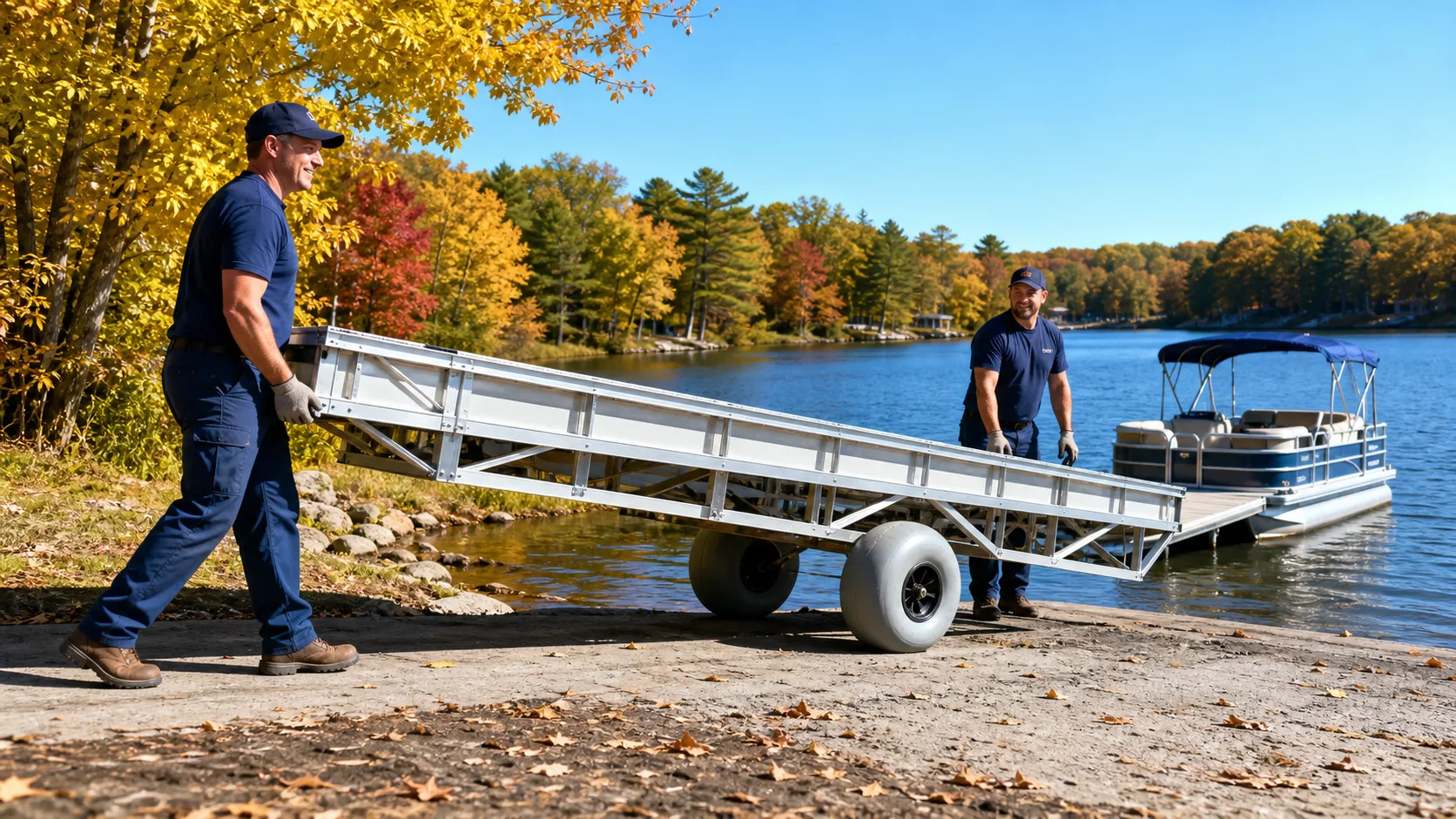
Rolling heavy sections of dock in and out of the lake can be the hardest part of owning roll-in boat docks. When the wheels are too small, too narrow, or in the wrong place, the dock fights you at every step. It digs into the shore, gets stuck in soft spots, and feels unsafe to move with family and friends helping.
A good dock wheel kit changes that. With the right tire size, axle length, and bracket placement, your dock rolls straighter, sinks less into the bottom, and takes less muscle to move. It also helps protect your frame and decking from sudden drops, sharp rocks, and awkward twists.
In this guide, we will walk through how to match a wheel setup to your shoreline slope and bottom conditions. As a Minnesota-based, family-owned dock manufacturer, we work with roll-in systems every day, and we want your dock to move the way it should: smooth, simple, and safe.
Reading Your Shoreline: Slope and Bottom Basics
Before choosing tires and axles, it helps to understand the path your dock has to travel. Shorelines are not all the same, and small changes in slope or bottom type make a big difference.
You can think of slope in three simple groups:
- Gentle slope: Long, gradual walk to deeper water, no sudden drop-offs
- Moderate slope: Noticeable downhill walk, dock needs to roll a fair distance to reach depth
- Steep slope: Short, sharp drop to depth, often with a tighter turn or ledge at the shoreline
Now look at the bottom where the tires will roll:
- Sand: Firm and even, easy rolling, but can form small ridges
- Muck: Soft and squishy, wheels sink and drag if they are too small
- Rock: Hard and uneven, needs more clearance and stronger support
- Mixed: A little of everything, so you need a more flexible setup
When you know both slope and bottom, you can plan for how far the dock must move, how deep the wheels will go, and how much traction they will have. Getting that right helps you avoid wheels sinking in muck, bouncing on rocks, or tipping as you push the dock in or pull it out.
Choosing Dock Tire Size for Your Shore Conditions
Tire size is usually the first thing people notice on roll-in boat docks. Bigger is not always better, but it often makes your life easier on certain shorelines.
Smaller diameter, narrower tires are best when:
- The shoreline slope is gentle
- The bottom is firm sand or packed gravel
- The dock does not need to roll very far into deeper water
These tires are lighter and simple to handle. They work well where the dock frame never sees deep muck or deep ruts.
Larger diameter, wider, or flotation-style tires help when:
- The shoreline is moderate or steep
- The bottom is soft, mucky, or uneven
- You need to push the dock into deeper water for proper depth
Bigger and wider tires spread the weight of the dock over more surface area. That means they sink less and roll easier in soft spots. On steeper slopes, the larger rolling surface helps the dock move more smoothly instead of dropping into holes.
In early summer, water is often higher and the bottom can still be soft from spring. Choosing a tire that is slightly larger or wider than the bare minimum can keep your dock rolling well through those soft periods instead of bogging down halfway in.
Dialing in Axle Length for Stability and Support
Axle length controls how far apart your wheels sit under the dock. That spacing has a big effect on how stable the dock feels as you move it.
A longer axle can:
- Spread the load across a wider footprint
- Help the dock track straighter on the way in and out
- Improve balance on steeper slopes or with heavier decking
But if the axle is too long, the tires may stick out far past the frame, making it harder to clear rocks or narrow shore paths.
A shorter axle can work well when:
- Dock sections are narrow
- The shoreline path is tight, with trees or retaining walls nearby
- You have a gentle slope and firm bottom
When picking axle length, aim to keep the tires tucked in enough to avoid hitting corners, shore obstacles, or large rocks, while still wide enough that the dock does not rock from side to side. Think about any extra weight, such as benches, stairs, or a lift nearby, and allow enough width to support that load without feeling tippy.
Smart Bracket Placement for Easy Rolling and Level Docks
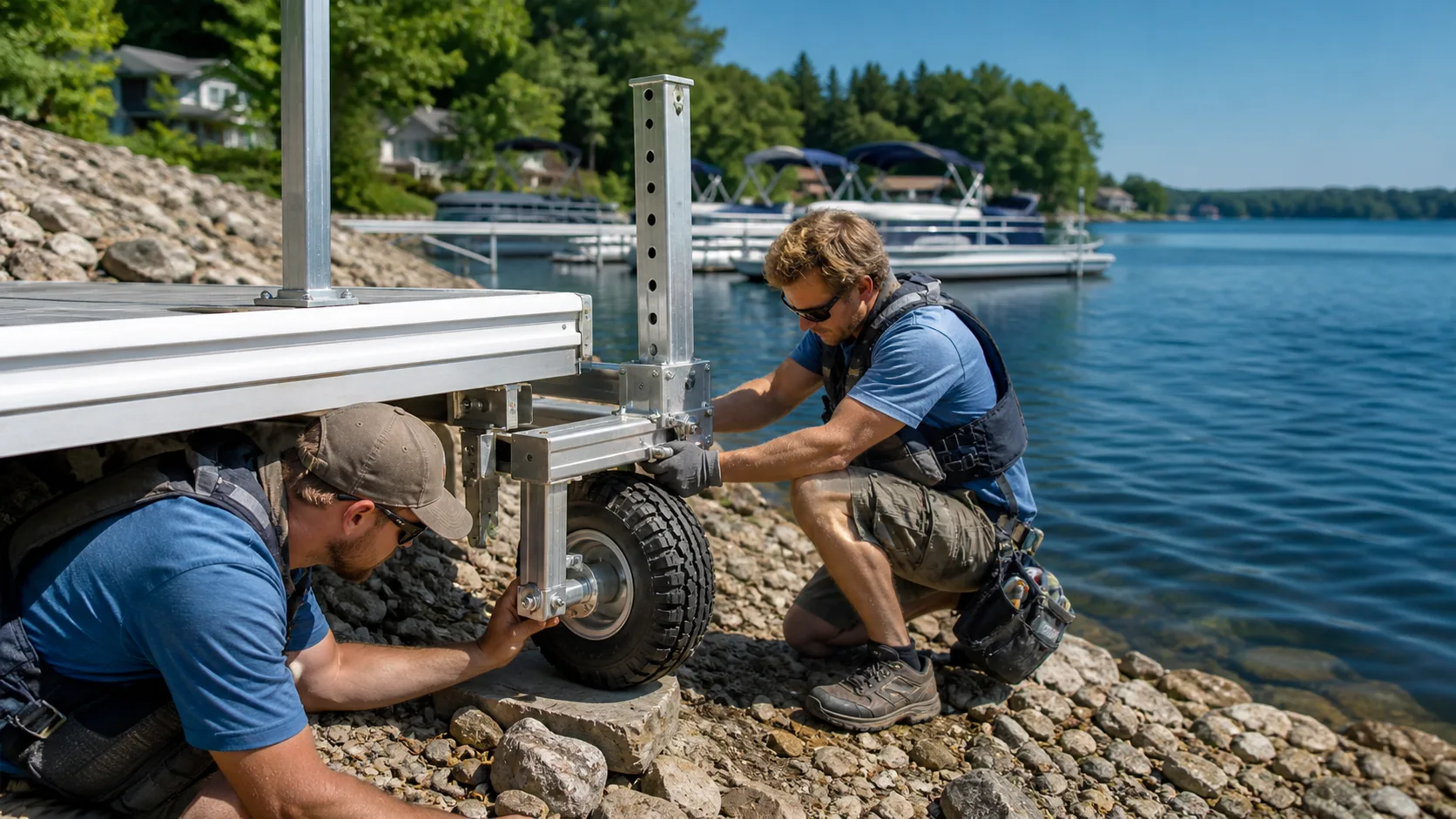
Bracket placement is the quiet hero of a good wheel kit. Even the best tires will struggle if the brackets are in the wrong spot on the dock frame.
Good bracket placement should:
- Keep the dock weight centered over the wheels
- Prevent the shore end from digging in or the lake end from dropping
- Make it easy to roll over the shoreline edge and into the water
In general:
- Gentle slopes often do well with the brackets closer to the middle of the frame, keeping the dock level as you move it.
- Steep slopes may need the brackets shifted slightly toward the shore end or lake end, depending on how the dock tips as you start rolling.
Bracket height matters too. Higher mounted brackets raise the frame and add clearance over rocks, but if they are too high, the dock can feel tall and harder to control. Lower brackets keep the frame closer to the bottom for stability, but on a rocky shore, that can mean more snags.
A small adjustment in fore and aft bracket position can be the difference between a dock that glides and a dock that noses in. Watching how your dock moves now can guide where to set new brackets or how to adjust existing ones.
Matching Complete Wheel Kits to Your Dock and Lift
Once you understand slope, bottom, tire size, axle length, and bracket placement, it is time to match a complete wheel kit to your actual equipment. Roll-in boat docks and lifts work best when every part of the wheel setup supports the rest.
When planning a kit, think through:
- Dock frame style and width
- Material thickness and existing mounting points
- Any accessories, like stairs, benches, or canopies, that affect balance
- Whether you also want wheels on a vertical or cantilever lift nearby
For a gentle sandy bay, you might pair smaller, firm rolling tires with a moderate axle length and central brackets. On a steep rocky point, larger diameter tires, a wider axle, and higher bracket placement often give better clearance and control. In a mucky backwater, wide flotation-style tires, axle width sized for extra stability, and carefully placed brackets help keep everything from sinking and twisting as you move.
Taking time to match all three parts, tires, axles, and brackets, to your shoreline will make your next install smoother and safer. At Vibo Marine, we build roll-in dock systems, lifts, and accessories in Minnesota, and we know how much easier seasonal work feels when the wheel kit is dialed in for your lakefront.
Transform Your Shoreline With Hassle-Free Dock Solutions Today
Upgrade your waterfront with our customizable roll-in boat docks designed for easy installation, seasonal removal, and long-lasting performance. At Vibo Marine, we take the time to understand your shoreline, water conditions, and goals so we can recommend the right configuration the first time. If you are ready to plan your project or have questions about layout, accessories, or timing, simply contact us and we will help you move from ideas to a clear, tailored dock plan.