When Pontoon Boat Lifts Prevent the Most Expensive Dock Damage
Protect Your Dock Investment Before Storms Hit
Strong winds, fast boat traffic, and changing water levels can turn a calm lake into a rough one in minutes. When that happens, your dock and your pontoon take the hit. Many lakefront owners focus on the boat, but the dock often ends up with the biggest and most expensive damage.
During midsummer, storms roll through more often, and weekends are packed with pontoons coming and going. All that motion pushes and pulls on your dock over and over. If your pontoon is tied directly to the dock instead of resting on a lift, that stress gets worse every hour it sits there.
The right pontoon boat lifts can shift that stress away from your dock and into a frame that is built to handle it. That can mean the difference between a quick tightening of a few bolts and replacing bent dock sections. At Vibo Marine in North Branch, Minnesota, we design aluminum docks and lifts with these real-world lake conditions in mind so homeowners can enjoy their shore instead of fixing it.
How Docks Really Get Damaged During Peak Season
Most dock damage is not from one big event. It builds slowly, day after day.
Hidden stress from waves and wakes
When water is choppy, waves and wakes work like a hammer on your dock.
- Repeated waves wiggle dock legs and frames until bolts loosen
- Large wakes slam pontoons into bumpers and corners
- The constant motion wears on brackets and joints
Pontoons are heavy and have a lot of surface area in the water. When they are tied to the dock, every wave has more boat to push on. That extra push turns into twisting and pulling on the dock whenever the boat surges forward and back.
Wind, storms, and fluctuating water levels
Strong gusts do not just rock the boat; they try to spin it. If that pontoon is tied to a dock finger, the twisting force travels straight into the dock frame. Over time, that can:
- Bend brackets and fingers
- Pull screws and bolts out of alignment
- Shift dock sections out of level
Changing water levels add another layer of stress. On many Midwest lakes, including here in Minnesota, water can rise, drop, or slosh from seiche effects. When that happens, the angle of the mooring lines changes, so force hits new spots on the dock, often where it is not designed to carry it.
Everyday wear that leads to big repair bills
Even on calm days, boats bump. A pontoon that rides up against a dock edge can create:
- Loose bolts from constant tiny impacts
- Bent cleats and cracked corners
- Hairline cracks in aluminum frames
These issues may look small at first. But they add up. A few bent parts can turn into a sagging section, broken decking, or a twisted frame that needs major repair or replacement. Many of these problems start with a boat that should have been sitting on a lift instead of hanging on the dock.
Why Pontoon Boat Lifts Are a Dock’s Best Defense
A good lift takes most of the work off your dock.
Lifting weight and motion off your dock
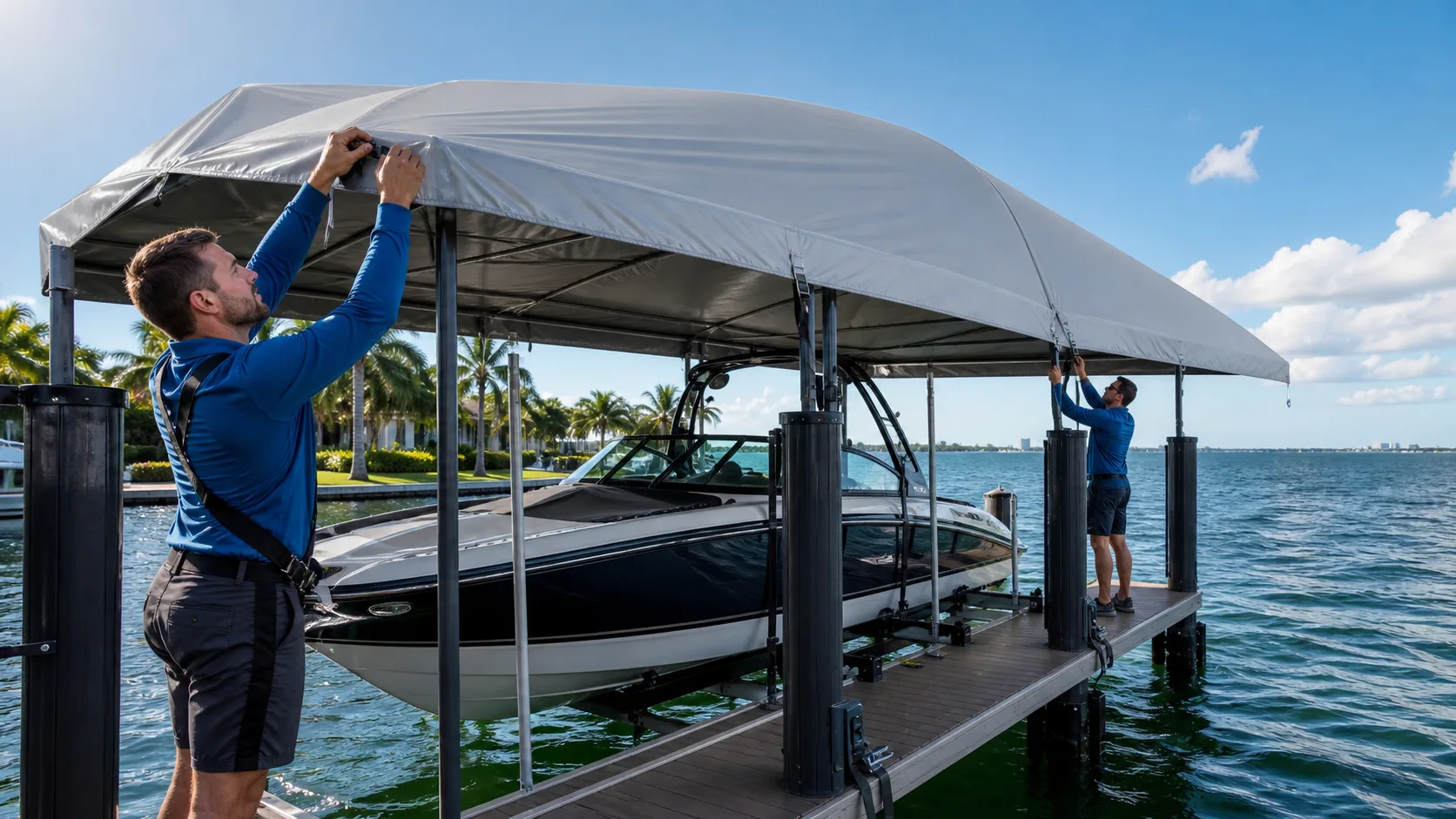
Pontoon boat lifts raise your boat so the weight and much of the motion move to the lift, not the dock. The lift frame is planned to support heavy loads, while your dock is meant for walking, sitting, and light use.
With the pontoon supported by a lift:
- Dock legs are not forced to act like mooring posts
- Dock brackets see far less twisting and side loading
- Decking is not scraped by fenders and hulls
That means your dock can last longer and stay straighter.
Stability in rough water and busy weekends
On busy holiday weekends, water gets rough even without storms. A properly sized pontoon lift keeps the boat centered and level, instead of lunging at the dock with each passing wake. Out of the water, the hull is not catching waves, so there is far less bumping and jerking.
Protection for both boat and shoreline
A lift does more than protect the dock. It also helps protect:
- The boat hull from waves, floating debris, and algae growth
- Paint and graphics from constant rubbing on bumpers
- Your shoreline from washouts caused by boats riding and surging at the dock
Fewer emergencies on the dock mean a more predictable plan for taking care of your property and more calm weekends actually spent on the water.
Features That Make a Lift Truly Dock-Friendly
Not every lift gives the same level of dock protection. The details matter.
Matching lift capacity to your pontoon
The first step is to choose a lift that is right for your pontoon. That means looking at:
- Total boat weight, including fuel and gear
- Length and width, especially on longer pontoons
- Any add-ons like hard tops or extra seating
If the lift is too small, it can flex or shift more than it should. That movement can transfer to where the lift and dock meet, shortening the life of both.
Smart design details that reduce stress
Dock-friendly lifts are built to spread out weight and resist side forces.
Helpful features include:
- Wide bases that stand steady in waves
- Adjustable legs to keep the lift level as lake bottoms change
- Bunks shaped for pontoon logs so support is even
- Smooth winch or drive systems that lift without jerking
- Corrosion-resistant aluminum that handles changing water levels
These details work together to keep loads even and prevent sharp pressure points that can damage nearby dock parts.
Easy use means consistent use
If raising and lowering the lift is hard, people tend to skip it. They leave the pontoon tied to the dock for a quick swim or lunch break, then storms blow in and the boat never made it onto the lift.
When a lift is simple to run, owners are more likely to:
- Use it every time they park the boat
- Put the boat up out of the water before storms
- Keep the dock clear of heavy loads day after day
At Vibo Marine, we plan our lifts so they are easy to live with, which helps keep both boat and dock safer.
Summer Setup Strategies to Avoid Dock Damage
How and where you set your lift matters almost as much as the lift itself.
Positioning your lift for maximum protection
A few placement tips can cut down on dock stress:
- Keep a small but safe gap between boat and dock to avoid constant contact
- Line up the lift so the boat sits straight, not at an angle that twists the dock
- When possible, place lifts so the bow faces into the most common wind direction
- Avoid tight corners where wakes tend to pile up
This setup helps reduce twisting and side loading on dock fingers and main sections.
Seasonal inspection checklist for midsummer
Peak season is the best time for a quick checkup. Look over:
- Lift cables and pulleys for wear or fraying
- Winch or drive systems for smooth, even lifting
- Bolts and fasteners on both dock and lift
- Dock brackets for signs of bending or movement
- Leg adjustments on both systems to keep them level
Listen for new noises and watch for uneven lifting or shifting. These small signs can point to growing stress before something bends or breaks.
Adjusting for changing water and weather
As water levels change through the summer, so should your setup. You may need to:
- Raise or lower lift height so the boat clears the water but is still easy to board
- Adjust dock legs to keep sections flat and stable
- Re-check alignment after strong storms or busy weekends
Small changes at the right time help relieve hidden strain and keep your dock and lift working together.
Get Your Dock Ready for the Rest of the Season
Midseason is the perfect time to look at how your dock and pontoon are working together. If the boat is mostly tied to the dock instead of sitting on a lift, you are likely putting extra stress on every part of your shoreline setup.
At Vibo Marine, we design and build aluminum docks, pontoon boat lifts, and accessories with lake homeowners in mind. Taking the time to match a lift to your pontoon and your lake conditions can protect both your dock and your boat so the rest of the season is spent relaxing on the water instead of dealing with repairs.
Protect Your Pontoon With a Reliable Lift Solution
If you are ready to keep your boat safer, cleaner, and easier to access, explore our pontoon boat lifts built to handle real-world waterfront conditions. At Vibo Marine, we help you choose the right configuration for your shoreline, water depth, and boating style. Our team is here to answer questions, provide pricing, and walk you through installation options. Reach out today through our contact page so we can help you plan the best setup for your dock.